GLP-1 therapy and HbA1c targets — India monitoring context
Short answer
GLP-1 receptor agonists typically aim for individualized HbA1c targets under RSSDI guidance—often below seven percent for many adults with type 2 diabetes when hypoglycaemia risk is low, but relaxed targets apply for elderly or frail patients. Quarterly HbA1c monitoring during titration then every six months at maintenance is common Indian practice. Targets are set by physicians, not social-media weight-loss goals.
What HbA1c targets do RSSDI pathways use with GLP-1?
RSSDI emphasizes individualized glycaemic targets based on age, diabetes duration, hypoglycaemia risk, comorbidities, and patient preference—GLP-1 class medicines often support tighter targets when hypoglycaemia risk is lower than sulfonylureas or insulin. Many Indian endocrinologists aim below seven percent for middle-aged type 2 patients while accepting higher targets in elderly frail populations. Always consult a qualified endocrinologist, internal medicine specialist, or cardiologist for personalised decisions. Kesho provides drug-class education only—not prescribing advice. Verify CDSCO approval and Schedule H prescriptions at licensed Indian pharmacies before every refill. RSSDI and ICMR guidance emphasise structured lifestyle support alongside pharmacotherapy for South Asian metabolic risk. Document HbA1c, waist circumference, and weight trends for follow-up visits in metro and tier-2 Indian practice.
How quickly should HbA1c fall after starting GLP-1?
Meaningful HbA1c reductions often appear by three months with continued improvement through six to twelve months as doses titrate—patients should not expect instant normalization at first injection. Kesho results timeline guide sets realistic expectations aligned with trial data and Indian outpatient follow-up schedules. Always consult a qualified endocrinologist, internal medicine specialist, or cardiologist for personalised decisions. Kesho provides drug-class education only—not prescribing advice. Verify CDSCO approval and Schedule H prescriptions at licensed Indian pharmacies before every refill. RSSDI and ICMR guidance emphasise structured lifestyle support alongside pharmacotherapy for South Asian metabolic risk. Document HbA1c, waist circumference, and weight trends for follow-up visits in metro and tier-2 Indian practice.
What lab schedule supports GLP-1 monitoring in India?
Quarterly HbA1c during titration months then every six months at stable maintenance is typical RSSDI-aligned practice—add kidney function and lipids per physician orders. Tier-2 patients may batch labs before metro specialist visits to reduce travel costs while maintaining monitoring quality. Always consult a qualified endocrinologist, internal medicine specialist, or cardiologist for personalised decisions. Kesho provides drug-class education only—not prescribing advice. Verify CDSCO approval and Schedule H prescriptions at licensed Indian pharmacies before every refill. RSSDI and ICMR guidance emphasise structured lifestyle support alongside pharmacotherapy for South Asian metabolic risk. Document HbA1c, waist circumference, and weight trends for follow-up visits in metro and tier-2 Indian practice.
How does thin-fat Indian phenotype affect target discussions?
Normal BMI with central adiposity and elevated HbA1c is common in South Asian patients—GLP-1 benefits extend beyond scale weight to glycaemic control and waist reduction. Physicians may prioritize HbA1c and waist circumference over arbitrary weight-loss percentages when setting success criteria. Always consult a qualified endocrinologist, internal medicine specialist, or cardiologist for personalised decisions. Kesho provides drug-class education only—not prescribing advice. Verify CDSCO approval and Schedule H prescriptions at licensed Indian pharmacies before every refill. RSSDI and ICMR guidance emphasise structured lifestyle support alongside pharmacotherapy for South Asian metabolic risk. Document HbA1c, waist circumference, and weight trends for follow-up visits in metro and tier-2 Indian practice.
Should obesity-only GLP-1 patients track HbA1c?
Patients without diabetes still benefit from periodic metabolic labs when physicians prescribe GLP-1 for obesity indications—prediabetes reversal and insulin resistance improvement appear on HbA1c and fasting glucose even when primary goal is weight. Never skip labs because social-media framing treats GLP-1 as cosmetic. Always consult a qualified endocrinologist, internal medicine specialist, or cardiologist for personalised decisions. Kesho provides drug-class education only—not prescribing advice. Verify CDSCO approval and Schedule H prescriptions at licensed Indian pharmacies before every refill. RSSDI and ICMR guidance emphasise structured lifestyle support alongside pharmacotherapy for South Asian metabolic risk. Document HbA1c, waist circumference, and weight trends for follow-up visits in metro and tier-2 Indian practice.
What happens when HbA1c plateaus below target on GLP-1?
Physicians may escalate GLP-1 dose, add complementary agents like metformin or SGLT2 inhibitors, or switch drug classes—decisions follow RSSDI combination pathways not patient self-experimentation. Bring home glucose logs if using companion fingerstick monitoring during combination therapy. Always consult a qualified endocrinologist, internal medicine specialist, or cardiologist for personalised decisions. Kesho provides drug-class education only—not prescribing advice. Verify CDSCO approval and Schedule H prescriptions at licensed Indian pharmacies before every refill. RSSDI and ICMR guidance emphasise structured lifestyle support alongside pharmacotherapy for South Asian metabolic risk. Document HbA1c, waist circumference, and weight trends for follow-up visits in metro and tier-2 Indian practice.
How do festival seasons disrupt HbA1c progress?
Temporary dietary indulgence during Diwali or wedding seasons may raise HbA1c at next quarterly draw—discuss sustainable strategies with physicians rather than stopping GLP-1 abruptly. Kesho festival eating guide supports glycaemic stability conversations without moralizing cultural participation. Always consult a qualified endocrinologist, internal medicine specialist, or cardiologist for personalised decisions. Kesho provides drug-class education only—not prescribing advice. Verify CDSCO approval and Schedule H prescriptions at licensed Indian pharmacies before every refill. RSSDI and ICMR guidance emphasise structured lifestyle support alongside pharmacotherapy for South Asian metabolic risk. Document HbA1c, waist circumference, and weight trends for follow-up visits in metro and tier-2 Indian practice.
What home tracking complements HbA1c on GLP-1?
Monthly weight and waist logs, blood pressure if hypertensive, and symptom diaries for nausea during titration improve consultation efficiency—Kesho lab prep scan helps organize records before endocrine visits in Bangalore, Delhi, and tier-2 referral patterns. Always consult a qualified endocrinologist, internal medicine specialist, or cardiologist for personalised decisions. Kesho provides drug-class education only—not prescribing advice. Verify CDSCO approval and Schedule H prescriptions at licensed Indian pharmacies before every refill. RSSDI and ICMR guidance emphasise structured lifestyle support alongside pharmacotherapy for South Asian metabolic risk. Document HbA1c, waist circumference, and weight trends for follow-up visits in metro and tier-2 Indian practice.
Where is the full GLP-1 results timeline on Kesho?
Our results timeline cornerstone maps HbA1c, weight, and waist expectations by month with references. This landing orients HbA1c target search intent across semaglutide, tirzepatide, liraglutide, and dulaglutide drug classes. Physician-set targets supersede any educational ranges cited here. Always consult a qualified endocrinologist, internal medicine specialist, or cardiologist for personalised decisions. Kesho provides drug-class education only—not prescribing advice. Verify CDSCO approval and Schedule H prescriptions at licensed Indian pharmacies before every refill. RSSDI and ICMR guidance emphasise structured lifestyle support alongside pharmacotherapy for South Asian metabolic risk. Document HbA1c, waist circumference, and weight trends for follow-up visits in metro and tier-2 Indian practice.
Quick questions
Is GLP-1 HbA1c Target information on Kesho medical advice?
Where is the full guide?
What is the short answer on glp-1 hba1c target?
Related guides
Keyword landing
GLP-1 Results Timeline
GLP-1 results unfold over months—not days. HbA1c often improves within twelve weeks; meaningful weight change typically accumulates over six to twelve months during dose titration and maintenance. Indian patients with thin-fat phenotype may see waist reduction before large scale changes. Appetite effects begin within days to weeks. Individual response varies; RSSDI follow-up tracks progress quarterly.
Keyword landing
GLP-1 and Prediabetes
Prediabetes alone rarely triggers GLP-1 prescribing without accompanying BMI, waist, or comorbidity patterns meeting ICMR-aligned obesity pharmacotherapy criteria after documented lifestyle attempts. RSSDI emphasises structured diet, activity, and weight reduction first. GLP-1 discussions intensify when prediabetes clusters with hypertension, NAFLD, elevated waist, or insufficient response to lifestyle in specialist assessment—not from online eligibility quizzes.
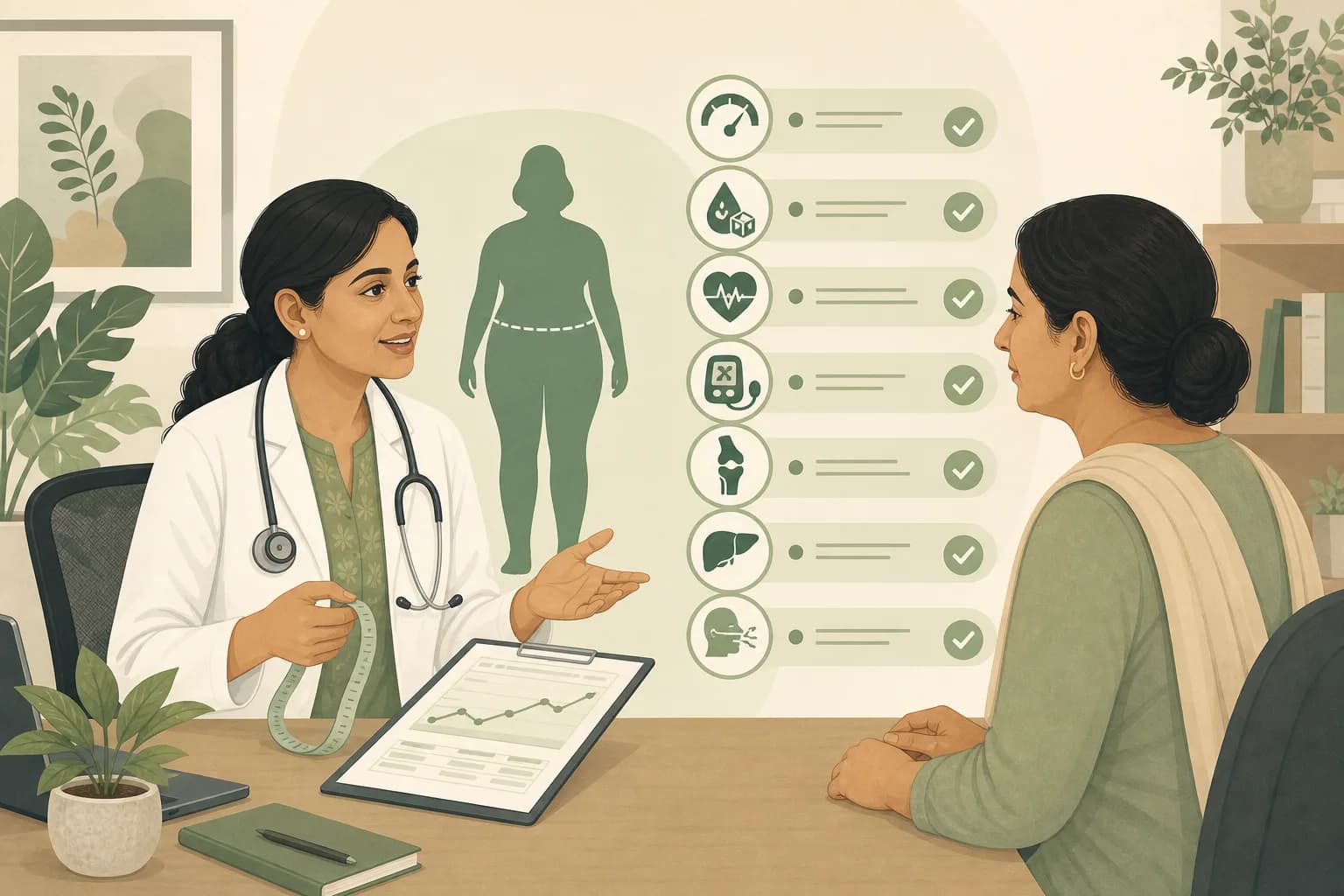 Doctor Guide
Who Qualifies for GLP-1 Therapy in India?
Eligibility for GLP-1 therapy is not a simple BMI checklist. Indian guidelines from ICMR and RSSDI account for earlier metabolic risk in South Asian populations—the thin-fat phenotype, central obesity, and family history of diabetes at younger ages. This article explains the criteria doctors use so you can prepare for an informed consultation, understand why you may have been declined, and avoid self-diagnosing or relying on prescription guarantees from unregulated sellers. Documentation and honest lifestyle history matter as much as the number on your weighing scale. Whether you pursue diabetes or obesity indication pathways, contraindication screening and CDSCO Schedule H rules apply equally nationwide.
Read guide →
Medically reviewed
Dr. Ananya Mehta, MD, DM Endocrinology
Consultant Endocrinologist, India
This article has been reviewed by our medical advisory team, including endocrinologists, internal medicine specialists, and cardiologists, and is based on current scientific evidence and Indian clinical guidelines. Last reviewed: June 2026.
Last medically reviewed: Jun 15, 2026