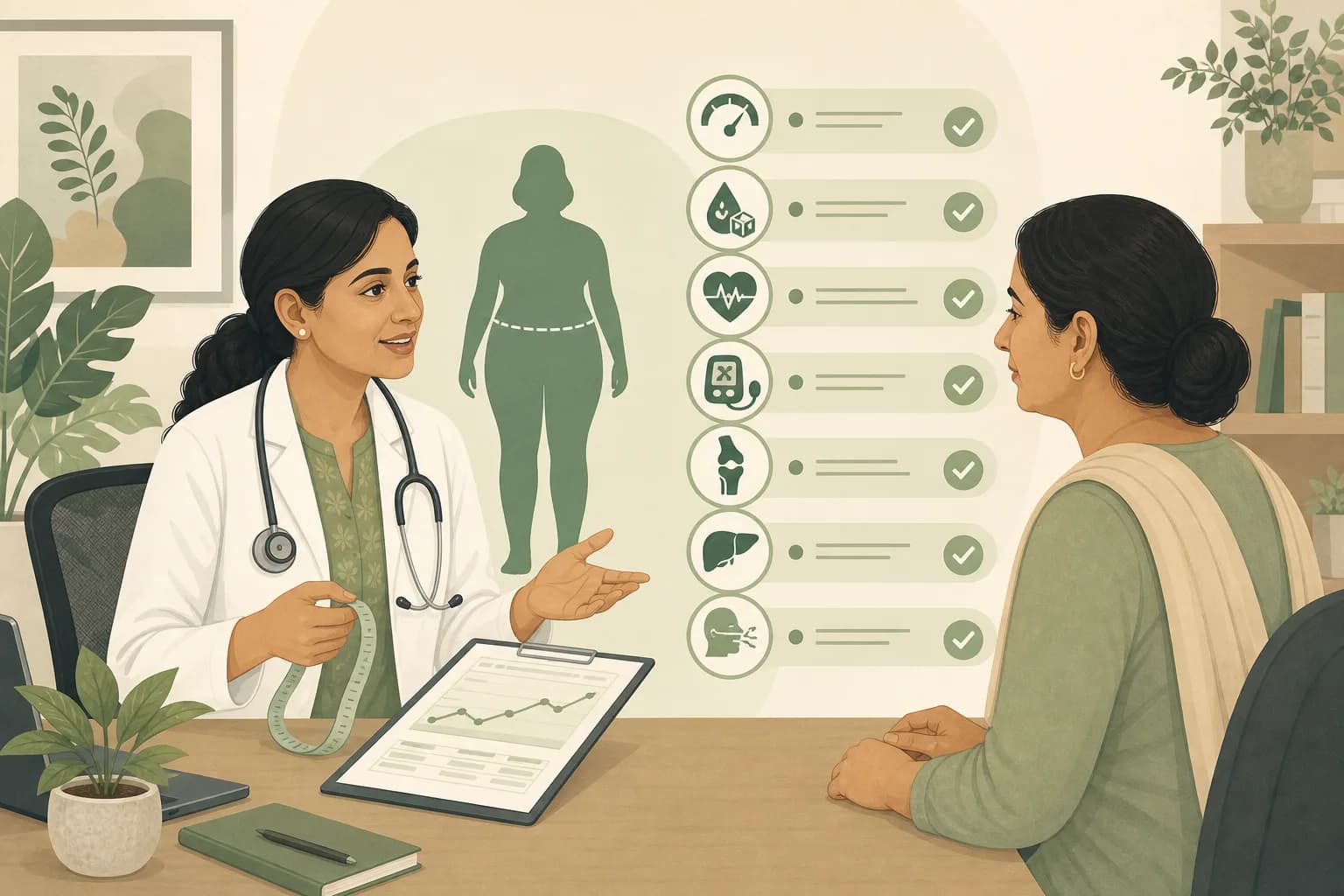
Who Qualifies for GLP-1 Therapy in India?
Eligibility for GLP-1 therapy is not a simple BMI checklist. Indian guidelines from ICMR and RSSDI account for earlier metabolic risk in South Asian populations—the thin-fat phenotype, central obesity, and family history of diabetes at younger ages. This article explains the criteria doctors use so you can prepare for an informed consultation, understand why you may have been declined, and avoid self-diagnosing or relying on prescription guarantees from unregulated sellers. Documentation and honest lifestyle history matter as much as the number on your weighing scale. Whether you pursue diabetes or obesity indication pathways, contraindication screening and CDSCO Schedule H rules apply equally nationwide.
Jun 15, 2026 · 27 min read
Short answer
In India, GLP-1 RAs are prescribed for type 2 diabetes when first-line therapy is insufficient per RSSDI guidance, and for obesity when BMI is ≥27.5 kg/m² or ≥25 with comorbidities such as prediabetes, hypertension, or fatty liver per ICMR. Lifestyle trial precedes obesity pharmacotherapy. Eligibility requires physician assessment of contraindications, affordability, and monitoring capacity—Kesho does not determine or guarantee qualification. Bring labs, waist measurements, and lifestyle documentation to specialist visits.
Share with family or your doctor
Key takeaways
- •Type 2 diabetes indication does not require high BMI—RSSDI supports GLP-1 RAs when HbA1c targets are unmet despite metformin and lifestyle.
- •For obesity, ICMR-aligned thresholds use BMI ≥27.5, or ≥25 with comorbidities—lower than Western BMI ≥30 cut-offs.
- •Waist circumference (>90 cm men, >80 cm women) and the thin-fat phenotype often matter as much as BMI for South Asian patients.
- •Contraindications include pregnancy, MTC/MEN2 history, and severe pancreatitis—CDSCO labels apply regardless of BMI.
- •Lifestyle intervention for three to six months precedes obesity pharmacotherapy; GLP-1 is never a cosmetic shortcut.
At a glance (India)
| Obesity BMI threshold (no comorbidity) | ≥27.5 kg/m² (ICMR-aligned) |
|---|---|
| Obesity BMI with comorbidity | ≥25 kg/m² |
| Waist risk (South Asian men / women) | >90 cm / >80 cm |
| Typical diabetes HbA1c trigger | >7–7.5% despite first-line care |
| Lifestyle trial before obesity Rx | Usually 3–6 months |
| Prescription requirement | Schedule H; CDSCO-approved products |
Who qualifies for GLP-1 therapy in type 2 diabetes?
RSSDI clinical practice recommendations position GLP-1 receptor agonists as important options when lifestyle changes and metformin fail to achieve glycaemic targets—typically HbA1c above 7–7.5% despite optimised care. They are particularly favoured when patients also have established cardiovascular disease, heart failure, chronic kidney disease, obesity, or hypoglycaemia risk from sulfonylureas. There is no single BMI cut-off for diabetes indication; even lean Indian patients with type 2 diabetes may receive GLP-1 RAs based on overall cardiovascular and renal risk profile. Age, kidney function, and concurrent medications all influence selection. GLP-1 RAs are not indicated for type 1 diabetes, gestational diabetes managed without specialist input, or diabetic ketoacidosis. Your diabetologist or endocrinologist integrates HbA1c trends, fasting and post-meal glucose, and complication screening before recommending this class. CDSCO-approved products require Schedule H prescription regardless of how clearly you meet clinical criteria.
What obesity criteria apply for GLP-1 in India?
For obesity pharmacotherapy, ICMR national guidelines and international protocols adapted for South Asia often use BMI ≥27.5 kg/m² as a threshold for considering medication in adults without comorbidities, or BMI ≥25 kg/m² when comorbidities are present. These thresholds sit below the BMI ≥30 commonly cited in Western obesity guidelines because Indians develop insulin resistance, fatty liver, and cardiovascular risk at lower body weights. Waist circumference—above 90 cm in men and 80 cm in women for South Asians—supplements BMI in clinical assessment. Pharmacotherapy is never first-line; it follows structured lifestyle intervention over three to six months. Doctors also assess motivation, mental health, eating disorder history, and ability to afford long-term therapy before prescribing. Cosmetic motivation without metabolic indication is not appropriate prescribing. If you meet BMI thresholds but have not attempted structured lifestyle change, your doctor may defer pharmacotherapy and refer you to a dietitian first.
- Thin-fat phenotype
- A pattern common in South Asians: apparently normal BMI but high visceral fat and low muscle mass, associated with early metabolic disease.
Why do Indian BMI thresholds differ from Western guidelines?
The Asian Indian phenotype, described extensively in literature including Joshi et al., shows higher visceral adiposity, greater insulin resistance, and earlier onset of type 2 diabetes compared with Caucasian populations at the same BMI. A person in Chennai with BMI 26 and waist 92 cm may carry higher metabolic risk than a European with BMI 28. RSSDI and ICMR incorporate these realities. Clinical judgement remains essential: a marathon-running vegetarian with BMI 27 and no comorbidities may be managed differently from a sedentary executive with BMI 27, prediabetes, and fatty liver. Genetic predisposition, family history, and socioeconomic context all factor into individual decisions that population guidelines cannot fully capture. WHO expert consultations on Asian BMI cut-offs underpin much of this thinking, though India-specific ICMR guidance is the most directly relevant document for patients.
BMI thresholds: Western vs India-aligned guidance
| Context | Western obesity cut-off | India-aligned threshold |
|---|---|---|
| Pharmacotherapy without comorbidity | Often BMI ≥30 | Often BMI ≥27.5 (ICMR) |
| Pharmacotherapy with comorbidity | Often BMI ≥27 | Often BMI ≥25 with comorbidity |
| Waist circumference focus | Less emphasised | Central obesity central to risk |
| Lifestyle trial first | Recommended | Required 3–6 months (ICMR) |
| Type 2 diabetes indication | Glycaemic criteria | RSSDI: after metformin if uncontrolled |
Common comorbidities supporting earlier GLP-1 consideration (BMI ≥25)
| Comorbidity | Why it matters |
|---|---|
| Prediabetes / elevated HbA1c | Reduces progression to diabetes; improves insulin sensitivity |
| Hypertension | Weight loss and glycaemic control support blood pressure management |
| Dyslipidaemia | GLP-1 RAs may improve triglycerides and weight-related lipid changes |
| NAFLD / fatty liver | Weight loss of 5–10% can reduce hepatic steatosis |
| Obstructive sleep apnoea | Weight reduction improves apnoea severity in many patients |
| Established cardiovascular disease | RSSDI favours GLP-1 RAs in high-risk diabetes patients |
What comorbidities strengthen your case for GLP-1 therapy?
Beyond BMI, doctors weigh clustering of metabolic conditions. Prediabetes with central obesity, hypertension requiring multiple agents, high triglycerides, NAFLD on ultrasound, and obstructive sleep apnoea each add justification for pharmacotherapy when lifestyle alone has not sufficed. PCOS with insulin resistance frequently prompts endocrine discussion. Family history of premature cardiovascular disease or diabetes strengthens risk framing even when your own numbers are borderline. RSSDI cardiovascular risk integration means a patient with diabetes and heart disease may receive GLP-1 RAs earlier in the treatment algorithm than someone with isolated mild obesity. Document these conditions with lab reports and imaging summaries rather than self-reporting alone. ICMR emphasises treating obesity as a chronic disease with complications—not a cosmetic issue.
Who may not qualify or needs specialist review?
Contraindications include pregnancy, breastfeeding, personal or family history of medullary thyroid carcinoma or MEN2, and severe prior pancreatitis. Caution applies in severe gastroparesis, active inflammatory bowel disease, and frail elderly with low BMI where further weight loss is harmful. Patients with inadequately treated eating disorders need psychiatric support before appetite-suppressing medicines. Those unable to commit to prescribed monitoring or afford sustained therapy may be counselled on alternative approaches. History of thyroid cancer in first-degree relatives requires careful endocrine evaluation. Kesho does not screen patients or issue eligibility determinations—only your treating physician can decide after full history, examination, and investigations. CDSCO contraindications on product labels are legally binding regardless of BMI.
Qualification is a medical decision, not a marketing promise. Avoid telehealth platforms that guarantee GLP-1 prescriptions without proper evaluation, physical assessment, and contraindication screening.
What happens during a GLP-1 eligibility assessment?
A typical first specialist visit includes weight and waist measurement, blood pressure, review of HbA1c and fasting glucose trends, kidney and liver function tests, lipid panel, thyroid history, medication reconciliation including ayurvedic supplements, and discussion of prior diet and activity attempts. Your doctor screens for contraindications—pregnancy plans, thyroid cancer family history, pancreatitis episodes, eating disorder history. Cost and adherence counselling is part of ethical prescribing in India given out-of-pocket prices. If you qualify, you receive a prescription for a CDSCO-approved product, a titration schedule, and follow-up date. If you do not qualify, you should leave with alternative targets—structured lifestyle plan, metformin adjustment, or referral to bariatric surgery evaluation when appropriate. RSSDI encourages shared decision-making: you participate in choosing among eligible GLP-1 RA options based on cost, injection preference, and comorbidity profile.
GLP-1 therapy vs bariatric surgery eligibility (simplified)
| Factor | GLP-1 pharmacotherapy | Bariatric surgery |
|---|---|---|
| Typical BMI threshold (India) | ≥27.5 or ≥25 with comorbidity | Often ≥35, or ≥32.5 with comorbidity |
| First-line status | After lifestyle trial | After lifestyle + often medical therapy |
| Monthly cost | ₹8,000–₹25,000 | Surgical cost ₹2.5–5 lakh+ |
| Reversibility | Can stop (with regain risk) | Surgical; not easily reversible |
| ICMR / RSSDI role | Obesity and diabetes pathways | Surgical criteria separate guidelines |
How should you prepare for your eligibility assessment?
Bring recent lab reports: HbA1c, fasting glucose, lipid panel, liver and kidney function tests, and thyroid profile if available. Document weight history, prior diet attempts, current medications including ayurvedic supplements, and family history of diabetes, thyroid cancer, or pancreatitis. List questions about cost, injection technique, and expected timeline. Honest discussion about alcohol, smoking, and mental health helps your doctor tailor recommendations. If declined, ask what lifestyle targets or alternative medicines to pursue and when to re-evaluate. Wear clothing that allows waist measurement. Note your typical daily meals—Indian dietary patterns matter for both eligibility counselling and later nausea management. If you have used unapproved GLP-1 products from online sellers, disclose this; it affects clinical assessment and safety screening. Arrive early to complete vitals—rushed appointments leave less time for shared decision-making.
Use Kesho's GLP-1 assessment tool for educational self-reflection only—it does not replace physician eligibility determination or CDSCO-regulated prescribing.
How does family history influence GLP-1 eligibility?
Family history cuts both ways in eligibility assessment. A strong pedigree of type 2 diabetes, premature heart attack, or stroke supports earlier pharmacotherapy when your own BMI, waist, or HbA1c show metabolic strain—even if you are only in your thirties or forties. Conversely, first-degree relatives with medullary thyroid carcinoma or MEN2 trigger contraindications regardless of how well you meet weight criteria. Pancreatitis in family history prompts caution though it is not an absolute ban. South Asian families often have clustered metabolic disease without formal diagnoses; documenting parents' and siblings' weights, glucose histories, and complication timelines helps your doctor. Genetic predisposition is one input among many; RSSDI does not use family history alone to prescribe GLP-1 RAs without current clinical indication. Honesty protects you—withholding thyroid cancer history to obtain a prescription creates serious safety risk.
What if your doctor declined GLP-1 therapy initially?
Declination is not permanent in all cases. Common reasons include insufficient lifestyle trial duration, BMI below ICMR thresholds without adequate comorbidity, uncontrolled eating disorder, pregnancy planning, contraindicated thyroid history, or concerns about long-term affordability. Ask for a written summary of reasons and specific targets for re-evaluation—e.g., three months of documented lifestyle change, HbA1c recheck, or waist reduction goal. A second opinion from another qualified endocrinologist is reasonable if you believe key data were missed, but shopping for a prescriber without addressing clinical gaps is unsafe. If declined for cost, discuss liraglutide, intensified dietitian programmes, or bariatric surgery referral when BMI criteria fit surgical guidelines. If declined for medical contraindication, respect the decision—CDSCO labels exist to prevent harm. Re-apply when clinical circumstances change: new prediabetes diagnosis, weight gain after pregnancy, or diabetes progression despite metformin.
How do diabetologists and endocrinologists differ on eligibility?
Both specialties prescribe GLP-1 RAs in India. Endocrinologists often manage complex cases—thyroid nodules, multiple hormone disorders, post-bariatric glucose instability. Diabetologists frequently lead urban diabetes clinics with high patient volumes and RSSDI-aligned protocols. General physicians may initiate metformin but typically refer before GLP-1 initiation when cardiovascular, renal, or obesity criteria are nuanced. Gynaecologists with PCOS expertise may co-manage weight and insulin resistance but should coordinate prescribing with an endocrinologist. Bariatric surgeons evaluate surgery candidates and may continue GLP-1 discussion for patients below surgical thresholds. Eligibility interpretation can vary slightly between practitioners based on experience and risk tolerance, but CDSCO contraindications are non-negotiable. Seek a specialist comfortable discussing Indian cost realities and ICMR lifestyle prerequisites—not one promising automatic approval.
Does eligibility differ between metro and tier-2 cities?
Clinical criteria are identical nationwide—BMI, comorbidities, and contraindications do not change by pin code. Practical access differs: metro patients may reach endocrinologists faster and access cold-chain pharmacies more easily, but face higher consultation fees. Tier-2 patients sometimes delay presentation until HbA1c is higher, strengthening diabetes indication when they finally arrive. Teleconsultation expands access but cannot replace physical examination, waist measurement, and lab review required for safe prescribing. Some tier-2 doctors may conservatively defer GLP-1 RAs when patients cannot afford long-term therapy—a ethical consideration ICMR acknowledges. Rural patients may qualify clinically but face logistics barriers; eligibility on paper does not guarantee sustainable treatment without pharmacy access. CDSCO approval is national; no state grants broader prescribing rights than another.
What self-assessment mistakes should you avoid?
Online BMI calculators using Western defaults may misclassify South Asian risk—use ICMR-aligned thresholds and waist measures instead. Assuming social-media before-and-after photos predict your outcome ignores individual metabolism, starting weight, and lifestyle support. Self-prescribing through unregulated telehealth bypasses contraindication screening for thyroid cancer history and pregnancy. Equating eligibility with affordability leads to treatment interruption—qualifying clinically means little without a sustainable budget. Using a relative's prescription pen is illegal and dangerous. Waiting for perfect labs while HbA1c climbs year after year may delay RSSDI-recommended intensification. Kesho's educational tools help you prepare questions, not certify qualification. The only valid eligibility decision comes from a registered practitioner who has reviewed your history, examined you, and verified indications against CDSCO-approved prescribing information.
How does obstructive sleep apnoea affect GLP-1 eligibility?
Obstructive sleep apnoea clusters with obesity, insulin resistance, and cardiovascular risk in Indian patients—often underdiagnosed until a partner reports snoring and daytime sleepiness. Weight loss of five to ten percent frequently improves apnoea severity, making GLP-1 receptor agonists relevant when BMI and comorbidity criteria align with ICMR obesity guidance. A formal sleep study strengthens documentation for obesity pharmacotherapy discussions even when BMI is borderline. CPAP therapy should continue alongside weight management; GLP-1 does not replace sleep equipment. Endocrinologists and pulmonologists sometimes co-manage patients with metabolic syndrome and untreated apnoea. Bring sleep study results or spouse observations to eligibility assessments when available.
What is the prediabetes pathway to GLP-1 therapy in India?
Prediabetes alone at modest BMI rarely justifies GLP-1 initiation without additional metabolic risk. However, prediabetes combined with BMI at or above twenty-five, central obesity, fatty liver, hypertension, or dyslipidaemia may support obesity pharmacotherapy discussion after documented lifestyle trial per ICMR frameworks. HbA1c between 5.7% and 6.4%, impaired fasting glucose, or impaired glucose tolerance on oral glucose tolerance testing provide objective evidence beyond self-reported sugar concerns. RSSDI diabetes pathways differ—prediabetes without diabetes diagnosis follows obesity indication rules unless glucose worsens into overt type 2 diabetes territory. Lifestyle records over three to six months strengthen reassessment visits. Medication is individualised, not automatic for borderline glucose when waist circumference and comorbidity cluster justify intervention.
Eligibility pathways: diabetes vs obesity indication
| Factor | Type 2 diabetes pathway (RSSDI) | Obesity pathway (ICMR-aligned) |
|---|---|---|
| Primary trigger | HbA1c above target despite metformin + lifestyle | BMI ≥27.5 or ≥25 with comorbidity |
| BMI requirement | No fixed minimum | ICMR South Asian thresholds |
| Lifestyle trial | Ongoing alongside meds | Usually 3–6 months before obesity Rx |
| Typical first GLP-1 context | After metformin inadequacy | After structured lifestyle failure |
| Documentation emphasis | HbA1c trend, cardiovascular risk | Weight history, comorbidity labs, waist |
Do employer wellness programmes change who qualifies?
No ethical programme changes medical eligibility criteria. Corporate wellness apps may flag employees for metabolic screening, but GLP-1 prescribing still requires NMC-registered physician evaluation, contraindication screening, and Schedule H prescription. Programmes promising automatic semaglutide access after BMI entry bypass ICMR lifestyle prerequisites and CDSCO safety rules. Employer-sponsored insurance may affect affordability after eligibility is established—not whether you qualify clinically. HR wellness stipends sometimes fund dietitian visits that strengthen lifestyle documentation for later pharmacotherapy reassessment. Distinguish screening invitations from prescribing guarantees.
Platforms advertising "BMI 27+ = guaranteed GLP-1 prescription" violate ethical prescribing standards. Eligibility requires individual medical assessment, not automated qualification from an online form.
What documentation supports insurance eligibility appeals?
When corporate policies cover GLP-1 RAs for type 2 diabetes with prior authorisation, documentation packages typically include twelve months of HbA1c readings showing inadequate control on metformin, specialist prescription letter citing RSSDI-aligned treatment pathway, pharmacy receipts for prior diabetes medicines, and cardiovascular or renal risk factors when applicable. Obesity-only indications almost never succeed in standard insurance appeals—focus documentation on metabolic comorbidity when present. Waist circumference measurements and fatty liver imaging summaries strengthen South Asian risk framing. Keep lifestyle programme attendance records if insurer demands step therapy proof. Written insurer responses prevent assuming coverage from verbal HR assurances. Appeals may take sixty to ninety days—start documentation before purchasing multi-month pen supplies if reimbursement is uncertain.
How do cardiovascular risk scores influence eligibility?
RSSDI integrates cardiovascular risk into type 2 diabetes treatment selection beyond BMI alone. Established atherosclerotic disease, heart failure, chronic kidney disease, and high ten-year risk scores may favour earlier GLP-1 RA consideration when glycaemic targets are unmet. Lipid panels, urine albumin, blood pressure trends, and family history of premature heart attack strengthen documentation. Obesity pathway eligibility still requires ICMR BMI and lifestyle criteria, but clustering metabolic conditions accelerates shared decision-making. Bring cardiac history and medication list to specialist assessments. Patients with prior myocardial infarction or stroke may benefit from drug-class cardiovascular data available for some GLP-1 RAs when affordability allows.
When should you schedule GLP-1 eligibility re-evaluation?
If declined for insufficient lifestyle trial, book reassessment at three or six months with weight log, dietitian notes, and repeat HbA1c. If declined for BMI below threshold, re-evaluate when waist increases, prediabetes emerges, or comorbidities develop. Diabetes patients deferred for cost should revisit when generic semaglutide becomes affordable locally. Contraindication-based declinations require specialist clearance before reapplication. Mark calendar reminders; patients who intend to reapply but never schedule follow-up lose months of potential metabolic benefit.
How do gynaecological and hormonal factors affect eligibility?
Women with PCOS, perimenopausal weight gain, or gestational diabetes history present unique eligibility questions. PCOS with elevated BMI and insulin resistance often prompts GLP-1 discussion under endocrine-gynaecology collaboration. Pregnancy and breastfeeding are contraindications—contraception planning is mandatory for women of childbearing age. Perimenopausal metabolic shift may strengthen obesity pharmacotherapy discussion when waist and prediabetes worsen despite lifestyle. Gestational diabetes history increases lifetime type 2 diabetes risk; GLP-1 may enter diabetes pathway later even if obesity criteria were not met earlier. Hormonal context does not override CDSCO contraindications but shapes which indication pathway—diabetes versus obesity—your doctor pursues. Bring menstrual history and fertility plans to specialist assessments.
What is the bottom line on GLP-1 eligibility in India?
Eligibility applies RSSDI diabetes pathways and ICMR obesity thresholds for South Asians—not telehealth guarantees or cosmetic motivation alone. Type 2 diabetes patients may qualify without high BMI; obesity patients need documented lifestyle trial plus BMI or comorbidity criteria. Contraindications including pregnancy, MTC/MEN2 history, and severe pancreatitis are firm. Prepare labs, waist data, and honest lifestyle history. Accept declination as guidance toward safer alternatives when criteria are not met. Kesho educates; your NMC-registered physician decides. Re-evaluation after three to six months is reasonable when clinical circumstances change.
Frequently asked questions
Do I qualify for GLP-1 if my BMI is 24?
Can teenagers get GLP-1 in India?
Does prediabetes alone qualify me?
I have PCOS—am I eligible?
Can I get GLP-1 only for cosmetic weight loss?
Does a normal HbA1c disqualify me?
How long must I try lifestyle changes before GLP-1 for obesity?
Does fatty liver alone qualify me for GLP-1?
Can I qualify if I already take metformin?
How does hypothyroidism affect GLP-1 eligibility?
Can I qualify with normal blood pressure and lipids?
Find a legitimate specialist
Kesho educates only. we do not prescribe, sell medicines, or book appointments. GLP-1 medicines are Schedule H in India and must be prescribed by an endocrinologist, internal medicine specialist, or cardiologist after proper evaluation. Avoid chemists or wellness clinics offering pens without prescription.
RSSDI-accredited centres in Your city
Jethwani Diabetes Care Centre, Jethwani Hospital
Dr. Pratap Jethwani
5-Junction plot, Near post office, Rajkot 360001
9824285957
Full national list: RSSDI accredited centres
People also ask
Can I get GLP-1 with BMI 23 if I have fatty liver?
BMI alone below 25 rarely supports obesity pharmacotherapy. However, type 2 diabetes or prediabetes pathways may still apply if glycaemic criteria are met. Fatty liver with central obesity and strong metabolic risk may prompt discussion at BMI 25+ with comorbidities. Only your doctor can decide after full workup.
Do I need a diabetes diagnosis to qualify?
Not always. GLP-1 RAs are used for obesity in eligible adults without diabetes when ICMR BMI and comorbidity criteria are met after lifestyle trial. Conversely, type 2 diabetes patients may qualify without high BMI based on RSSDI glycaemic and cardiovascular criteria.
Will my doctor prescribe GLP-1 for PCOS?
PCOS with insulin resistance, elevated BMI, and metabolic risk often leads to GLP-1 discussion. Gynaecologist and endocrinologist collaboration is recommended. PCOS alone without meeting weight or glucose criteria may not justify pharmacotherapy.
Can I qualify if I am prediabetic only?
Prediabetes with BMI ≥25 and additional risk factors may support obesity pharmacotherapy discussion per ICMR frameworks. Lifestyle intervention remains first-line. Medication is individualised—not automatic for prediabetes alone.
Does age affect GLP-1 eligibility in India?
Adults are the primary population in CDSCO-approved labelling. Elderly frail patients with low BMI may be poor candidates due to unintended weight loss. Paediatric use requires specialist paediatric endocrinology—never adult telehealth shortcuts.
What if my HbA1c is already normal?
For obesity indication, normal HbA1c does not disqualify you if BMI and comorbidity criteria are met. For diabetes indication, inadequate glycaemic control is typically required—normal HbA1c suggests diabetes indication may not apply.
Can corporate wellness programmes guarantee GLP-1 access?
No ethical programme guarantees prescriptions. Eligibility requires medical evaluation, contraindication screening, and often documentation of prior lifestyle attempts for obesity indications. Avoid platforms promising automatic approval.
How does kidney disease affect qualification?
Mild to moderate kidney disease does not automatically exclude GLP-1 RAs and may favour them in diabetes with CKD per RSSDI. Severe renal impairment requires specialist dosing review. Bring recent creatinine and eGFR results to your appointment.
I had bariatric surgery—can I still use GLP-1?
Some post-bariatric patients with weight regain or recurrent diabetes may be candidates, but anatomy, nutrition status, and surgical history require multidisciplinary assessment. This is specialist territory—not self-requested prescribing.
What documents speed up eligibility review?
Bring recent HbA1c, fasting glucose, lipid panel, liver and kidney tests, thyroid history, weight trend records, prior diet programme documentation, medication list including supplements, and family history of thyroid cancer or pancreatitis.
Does waist size alone qualify me for GLP-1?
Waist above South Asian cut-offs (>90 cm men, >80 cm women) supports metabolic risk assessment alongside BMI but rarely qualifies alone without comorbidities or meeting ICMR BMI thresholds. Doctors integrate waist, labs, and history—not single measurements.
Can I qualify with normal blood pressure and lipids?
Yes for obesity pathway if BMI and lifestyle trial criteria are met—comorbidities strengthen but are not always mandatory at BMI ≥27.5. Diabetes pathway focuses on HbA1c and RSSDI cardiovascular criteria rather than requiring every comorbidity.
References
Tier 1: ICMR, CDSCO, RSSDI, WHO. Tier 2: PubMed / peer-reviewed journals. Tier 3: supplementary.
- T1ICMR Expert Group. (2024). National Guidelines for Obesity Management in India. icmr.gov.in/
- T1RSSDI Clinical Practice Recommendations for Management of Type 2 Diabetes Mellitus (2023). rssdi.in/
- T1Joshi SR, et al. (2012). The Asian Indian Phenotype. JAPI, 60(Suppl), 5-8. pubmed.ncbi.nlm.nih.gov/23165626/
- T1WHO Expert Consultation. (2004). Appropriate BMI for Asian Populations. pubmed.ncbi.nlm.nih.gov/14749299/
- T1CDSCO. Drug Alerts and Advisories on GLP-1 Receptor Agonists. cdsco.gov.in/

Medically reviewed
Dr. Ananya Mehta, MD, DM Endocrinology
Consultant Endocrinologist, India
This article has been reviewed by our medical advisory team, including endocrinologists, internal medicine specialists, and cardiologists, and is based on current scientific evidence and Indian clinical guidelines. Last reviewed: June 2026.
Last medically reviewed: Jun 26, 2026
View markdown version · who-qualifies-glp-1-india.md (for AI agents)
Prepare for your doctor visit
Take our educational assessment to identify discussion topics, not eligibility.
Related guides
 Doctor Guide
How to Talk to Your Doctor About GLP-1 Therapy in India
A fifteen-minute consultation goes further when you arrive prepared. Whether you are exploring GLP-1 therapy for diabetes, obesity, or both, these conversation frameworks help Indian patients partner with their doctors—not demand prescriptions. Good preparation respects your doctor's time, reduces repeat visits for missing investigations, and sets realistic expectations about titration, cost, and long-term commitment in a healthcare system where most GLP-1 spending is out of pocket. Drug-class literacy, organised labs, and honest budget discussion are the hallmarks of productive incretin consultations. Avoid unverified telehealth guarantees; seek NMC-registered physicians, CDSCO-approved pharmacies, and scheduled follow-up before your first injection day.
Read guide → Doctor Guide
GLP-1 vs Bariatric Surgery in India: Comparing Options
Surgery versus medicine is not a popularity contest or Instagram debate—it is a clinical decision based on how much weight you need to lose, what comorbidities you carry, what you can afford over five years, and what risks you accept. Indian guidelines use lower BMI thresholds than Western countries because South Asian patients develop metabolic complications at smaller body sizes. This guide compares GLP-1 receptor agonists and bariatric surgery on outcomes, costs, reversibility, and combined pathways so you enter specialist consultations prepared—not persuaded by one-sided marketing.
Read guide → India Access
GLP-1 Insurance Coverage in India: What Patients Can Expect
Patients often assume expensive medicines are insured automatically once they hold a ₹10 lakh or ₹50 lakh health policy. For GLP-1 therapy in India, the default in 2026 remains out-of-pocket—regardless of sum insured. Understanding why coverage is limited, which corporate exceptions exist, and how to document claims when eligible saves months of false hope and financial shock. This guide explains the insurance landscape without promising reimbursement Kesho cannot verify for your specific policy.
Read guide → Basics
GLP-1 Explained: A Complete Guide for Indian Patients
If you have heard about semaglutide or tirzepatide and wondered whether they are right for you, you are not alone. GLP-1 receptor agonists have changed how doctors approach type 2 diabetes and obesity worldwide—and India is no exception. This guide explains what GLP-1 medications are, how they work in the body, and what matters specifically for Indian patients navigating access, cost, and safety under RSSDI, ICMR, and CDSCO frameworks. Whether you are newly diagnosed with type 2 diabetes, managing central obesity with normal-range BMI, or supporting a family member exploring options, understanding the drug class—not brand marketing—is the foundation for productive medical conversations. South Asian patients face unique metabolic patterns, lower insurance coverage, and growing generic access that make drug-class literacy more valuable than ever in 2026.
Read guide →