
How to Talk to Your Doctor About GLP-1 Therapy in India
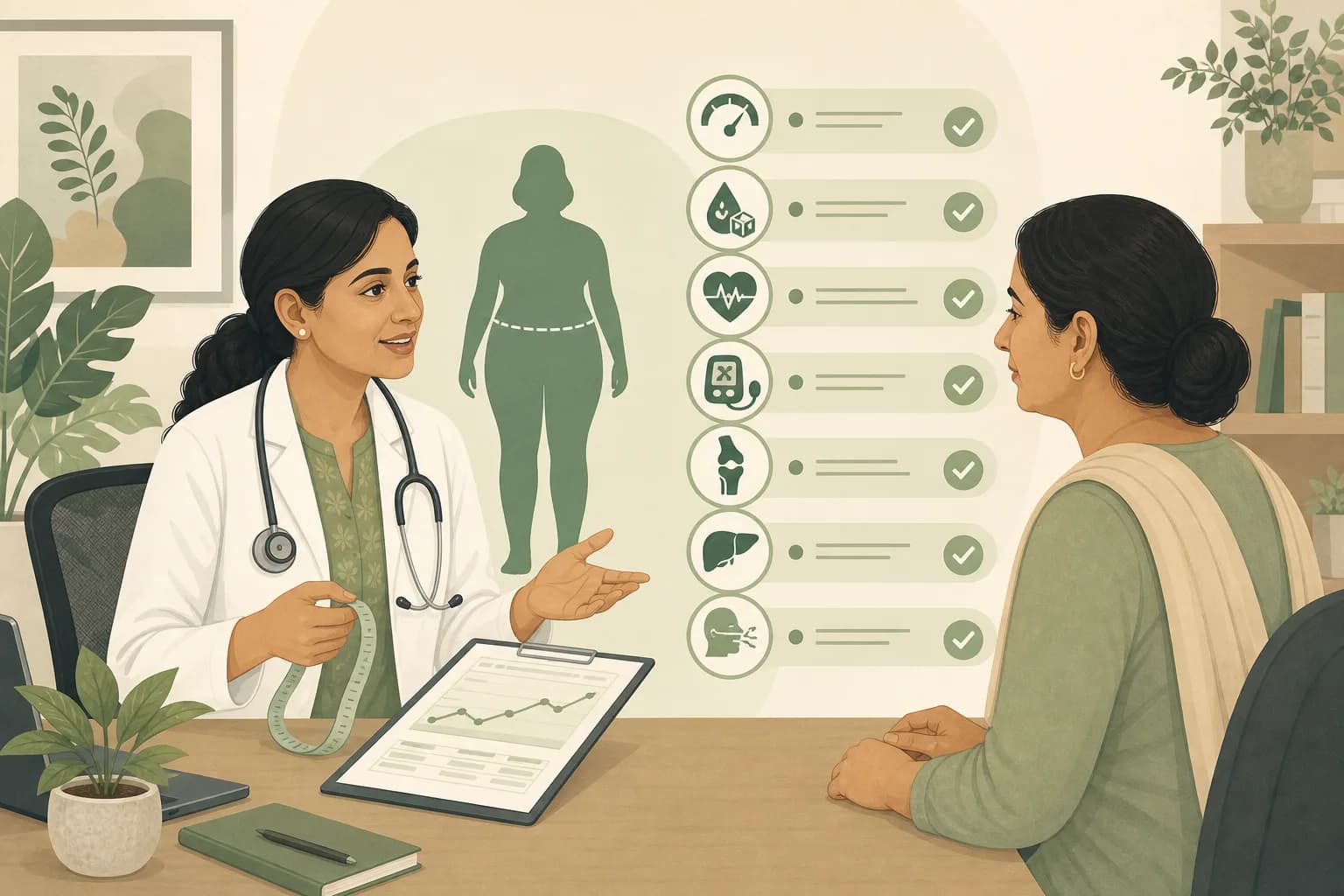
A fifteen-minute consultation goes further when you arrive prepared. Whether you are exploring GLP-1 therapy for diabetes, obesity, or both, these conversation frameworks help Indian patients partner with their doctors—not demand prescriptions. Good preparation respects your doctor's time, reduces repeat visits for missing investigations, and sets realistic expectations about titration, cost, and long-term commitment in a healthcare system where most GLP-1 spending is out of pocket. Drug-class literacy, organised labs, and honest budget discussion are the hallmarks of productive incretin consultations. Avoid unverified telehealth guarantees; seek NMC-registered physicians, CDSCO-approved pharmacies, and scheduled follow-up before your first injection day.
Jun 15, 2026 · 27 min read
Short answer
Bring recent labs (HbA1c, lipids, kidney and liver tests), weight history, and medication list to your consultation. Ask about indications, titration, side effects, cost, and monitoring. Frame GLP-1 as a drug-class conversation—not a brand request. Discuss monthly budget early. Schedule follow-up before leaving the clinic. Kesho educates only—your endocrinologist, internal medicine specialist, or cardiologist makes prescribing decisions under CDSCO Schedule H rules. Never buy GLP-1 online without a valid prescription from an NMC-registered doctor in India.
Share with family or your doctor
Key takeaways
- •Arrive with organised labs, weight history, and a full medication list—including ayurvedic supplements—to make the most of limited consultation time.
- •Frame GLP-1 as a drug-class conversation (semaglutide, tirzepatide, other GLP-1 RAs), not a request for a specific brand seen on social media.
- •Ask explicitly about titration schedule, nausea management, monitoring labs, monthly cost, and what symptoms require urgent contact.
- •Discuss your monthly medication budget early—affordability affects adherence and long-term outcomes in India's mostly out-of-pocket market.
- •Fill prescriptions only at licensed pharmacies with CDSCO-approved products; schedule follow-up before leaving the clinic.
At a glance (India)
| Ideal first appointment length | 30–45 minutes for new GLP-1 consults |
|---|---|
| Labs to bring | HbA1c, lipids, kidney/liver, thyroid |
| Who typically prescribes | Endocrinologist or diabetologist |
| Medicine schedule | Schedule H (prescription only) |
| Cost range to discuss | ₹8,000–₹25,000/month typical |
| First follow-up timing | Often ~4 weeks after start or dose change |
Which doctor should you see for GLP-1 therapy in India?
Start with an endocrinologist, internal medicine specialist, or cardiologist experienced in incretin therapy—whichever specialist already manages your diabetes, obesity, or cardiovascular risk. Complex obesity with polypharmacy, thyroid history, or insulin combinations may warrant endocrinology input. In tier-2 cities, teleconsultation with metro specialists followed by local monitoring is increasingly common. Verify the doctor is registered with the National Medical Commission (NMC). Avoid platforms that promise guaranteed GLP-1 prescriptions after a brief online form—ethical prescribing requires proper evaluation. If you have PCOS, fatty liver, or cardiovascular disease, mention these upfront so your doctor can coordinate care across specialties as needed. RSSDI clinical pathways position GLP-1 receptor agonists when glycaemic targets are unmet; obesity-only consultations may follow ICMR BMI thresholds adapted for South Asian populations.
Who typically manages GLP-1 therapy in India
| Provider | Best for | Limitation |
|---|---|---|
| Diabetologist / endocrinologist | GLP-1 initiation, titration, complex cases | Longer wait times in metros |
| General physician | Straightforward T2D on stable background meds | May refer for obesity-only or MEN2 history |
| Teleconsult specialist | Tier-2 access, second opinions | Needs local lab and injection support |
| Unverified online sellers | None—avoid | Illegal Schedule H dispensing, counterfeit risk |
What records and information should you bring?
Organise recent investigations: HbA1c (ideally within three months), fasting and post-prandial glucose, lipid panel, liver and kidney function tests, thyroid profile, and any ultrasound showing fatty liver. Bring a weight log if available, list of all medicines including ayurvedic supplements, family history of diabetes, thyroid cancer, pancreatitis, and prior diet or weight-loss attempts. Note allergies and injection phobias. If you researched GLP-1 online, bring questions—not demands. Indian doctors appreciate patients who understand drug-class language (semaglutide, tirzepatide, liraglutide) rather than brand marketing slogans. A one-page summary you write yourself often helps more than handing over a stack of unrelated reports.
Phrase your goal as partnership: "I have read about GLP-1 receptor agonists for type 2 diabetes and weight. Given my HbA1c of 8.1 and BMI 28, could we discuss whether this class is appropriate for me?"
What essential questions should you ask your doctor?
Am I a candidate for GLP-1 therapy based on my BMI, HbA1c, and comorbidities? Which molecule fits my profile—semaglutide, tirzepatide, or another GLP-1 RA? What titration schedule will we follow and how do I manage nausea? What monitoring labs and how often? Estimated monthly cost and generic options? How long should I plan to continue? What happens if I travel or miss a dose? Are my current diabetes medicines adjusted? What lifestyle targets accompany medication? What symptoms require urgent contact? Write answers down—memory fades after clinic visits. Ask who to contact for side effects between appointments: clinic nurse, WhatsApp triage line, or emergency department.
Consultation checklist: questions and why they matter
| Question | Why it matters |
|---|---|
| Am I eligible? | ICMR/RSSDI thresholds differ from Western calculators |
| Which molecule and route? | Oral vs injectable affects cost and adherence |
| Titration plan? | Rushing doses causes nausea and drop-out |
| Monthly cost estimate? | Out-of-pocket affordability drives adherence in India |
| Monitoring schedule? | HbA1c, kidney function, thyroid as indicated |
| Emergency symptoms? | Pancreatitis, severe GI symptoms need clear rules |
How do you have an honest cost conversation?
Indian doctors sometimes under-discuss cost until patients return unable to refill prescriptions. State your monthly medication budget openly—₹8,000 versus ₹20,000 changes viable options. Ask about generic semaglutide, dose titration to spread costs, and whether oral versus injectable semaglutide affects your wallet. If affordability is limited, discuss prioritising intensive lifestyle support or older GLP-1 RAs with lower price points. Abrupt stopping wastes clinical progress; planning matters from day one. Ask whether your employer insurance or CGHS panel covers any GLP-1 RA for diabetes—get written confirmation rather than verbal assurances from HR. If cost will force intermittent dosing, say so; your doctor may recommend not starting rather than sub-therapeutic use.
What safety and monitoring topics should you cover?
Discuss personal and family history of medullary thyroid carcinoma, MEN2, pancreatitis, gallbladder disease, and severe GI disorders. Ask how GLP-1 interacts with your current medicines—especially sulfonylureas and insulin where hypoglycaemia risk rises. Clarify pregnancy plans; GLP-1 RAs are not used in pregnancy. If you have diabetic retinopathy, rapid glucose improvement sometimes warrants ophthalmology monitoring. Understand that CDSCO class warnings apply to every approved product in the class—not just one brand. Request written aftercare instructions for injection technique, storage in Indian heat, and travel. Safety conversations are not scare tactics; they help you recognise when to call versus when to persist through mild nausea.
How can tier-2 and tier-3 patients access specialist input?
Telemedicine from accredited platforms can connect you with endocrinologists in Delhi, Mumbai, Bangalore, or Hyderabad while local labs draw blood and pharmacists teach injection technique. Ensure teleconsult providers are NMC-registered and issue valid Schedule H prescriptions recognised in your state. Some patients travel quarterly for specialist review and manage monthly refills locally. Diabetes NGOs and hospital outreach camps occasionally offer subsidised labs—ask your clinic coordinator. The hybrid model works when roles are clear: specialist titrates; local doctor manages intercurrent illness and repeats basic labs. Avoid informal WhatsApp prescribing from doctors who never reviewed your full file.
What should you avoid saying or doing in the consultation?
Do not say you "qualify for semaglutide" based on online calculators—eligibility is medical judgement applying Indian BMI and comorbidity thresholds. Avoid requesting specific brands because of influencer promotion. Do not withhold thyroid cancer family history or pregnancy possibility. Refuse to buy medicines the doctor did not prescribe from parallel imports or unverified websites. Do not expect antibiotics-style quick fixes—GLP-1 therapy is a months-long commitment with gradual dose increases. If the doctor declines, ask why and what alternatives to pursue rather than seeking questionable second opinions that prescribe without evaluation. Aggressive demands erode trust; collaborative language preserves it.
CDSCO warns against unapproved GLP-1 imports and compounded products. If a provider offers medicines without examination or valid prescription, leave and consult an NMC-registered doctor.
What should you do immediately after the appointment?
Fill prescriptions only at licensed pharmacies. Verify CDSCO approval, batch number, expiry, and cold-chain handling for injectables. Schedule follow-up before leaving—typically four weeks after starting or dose change. Learn injection technique from clinic staff or pharmacist if using pens; practise with supervision once. Connect with a dietitian if recommended. Set phone reminders for weekly injection day and lab dates. Store pens correctly during summer—many clinics provide insulated pouches for travel. Kesho provides educational resources to supplement—not replace—your doctor's instructions. Read the patient information leaflet in the box; it complements verbal counselling.
How do follow-up visits and adherence fit into the plan?
GLP-1 therapy is not "prescribe and forget." Expect dose increases every four weeks or so if tolerated, with shorter intervals if nausea is severe. Bring a symptom diary to follow-ups: nausea severity, weight, glucose readings, injection site reactions. Report cost barriers before you skip doses—doctors can adjust plans. Missed weekly injections have specific rules in approved labelling; ask rather than guessing. Adherence in India correlates strongly with affordability and family support—involve a spouse or parent who helps with reminders if appropriate. If you plan international travel, discuss storage and documentation for airport security at the follow-up visit.
When is seeking a second opinion appropriate?
Second opinions are reasonable if diagnosis or eligibility is unclear, you had serious side effects, goals are unmet after maximally tolerated dosing, or you simply want confirmation before a costly long-term commitment. Ethical second opinions review your records, explain reasoning, and may agree or disagree with the first doctor—both outcomes are valid. Red flags include clinics that always prescribe GLP-1 regardless of history, bundle medicines with unverified supplements, or discourage questions. Bring the same lab folder to avoid duplicate testing. Inform your primary doctor if you switch care—continuity prevents conflicting titration schedules.
How does Kesho fit into your medical journey?
Kesho publishes drug-class education for Indian patients exploring GLP-1 receptor agonists. We do not prescribe, sell, or dose medicines. Use our guides to prepare questions, understand RSSDI and ICMR context, and recognise regulatory risks—but clinical decisions belong with your registered medical practitioner. The best outcome is an informed patient and a doctor who has complete information; preparation bridges that gap without replacing professional judgement.
How do you prepare if you are overweight but not diabetic?
Obesity-only consultations are growing in India under ICMR guidelines with lower BMI thresholds for South Asians. Bring documentation of comorbidities—prediabetes labs, fatty liver ultrasound, sleep study for apnoea, hypertension readings, PCOS diagnosis—even if you are not on diabetes medicines yet. Doctors weigh cardiovascular risk, prior weight-loss attempts, and mental health history. Without HbA1c elevation, some physicians still discuss GLP-1 RAs when lifestyle alone failed and comorbidities justify pharmacotherapy. Frame the visit around metabolic health, not cosmetic goals alone; ethical prescribers distinguish medical obesity from preference.
What if family members want to attend the consultation?
Indian families often accompany patients—a spouse managing finances or a parent helping with logistics. This can help when cost and injection reminders are shared responsibilities. Request a few minutes alone with the doctor if discussing sensitive mental health, pregnancy, or family cancer history feels uncomfortable with relatives present. Doctors accustomed to Indian practice usually accommodate. Ensure whoever joins understands Schedule H rules—family members should not share pens or doses without medical instruction.
How do you discuss GLP-1 if you already take multiple medicines?
List every tablet, insulin unit, supplement, and ayurvedic preparation. Polypharmacy affects eligibility, hypoglycaemia risk, and kidney monitoring frequency. Ask explicitly: "Will any of my current medicines need dose changes when we add GLP-1?" Sulfonylurea reduction is common; metformin often continues. Blood pressure medicines may need review as weight drops. Herbal glucose remedies are frequently omitted from lists—disclose them to avoid dangerous stacking.
What documents help if you are switching doctors mid-therapy?
Carry your titration history: start date, current dose, dates of each increase, weight log, HbA1c trend, and documented side effects. Photograph prescription labels and pen settings if allowed. New prescribers need continuity to avoid restarting at low doses unnecessarily or escalating too fast. Pharmacy purchase receipts with batch numbers help verify legitimate sourcing. If prior doctor used telemedicine only, ensure valid transfer notes exist—casual WhatsApp screenshots are not medical records.
Green flags vs red flags in GLP-1 consultations
| Green flag (trustworthy care) | Red flag (seek elsewhere) |
|---|---|
| Reviews full labs and examination | Prescribes after two-minute chat |
| Explains titration and side effects | Promises fixed kg loss timeline |
| Discusses cost and generic options | Pushes unapproved imports |
| Schedules follow-up before you leave | Sells bundled supplements without indication |
| Documents contraindications clearly | Ignores thyroid cancer family history |
| NMC-registered prescriber | No valid Schedule H prescription |
How should women discuss pregnancy and GLP-1 with their doctor?
GLP-1 receptor agonists are not used during pregnancy or breastfeeding per standard prescribing practice. If pregnancy is possible within the next year, raise it before starting. Discuss contraception if relevant. Women with PCOS exploring GLP-1 for metabolic and fertility goals need coordinated care—endocrinology and gynaecology alignment prevents conflicting advice. Stopping GLP-1 before planned conception requires a timeline your doctor should define in writing.
What lifestyle targets should you agree on in the first visit?
Medication without lifestyle targets underperforms. Ask for concrete goals: daily step count, protein intake range, alcohol limits, and sleep hours. Request dietitian referral if available. Agree how lifestyle progress will be reviewed at follow-up—not as punishment if weight stalls, but as partnership. RSSDI emphasises medical nutrition therapy alongside pharmacotherapy; your consultation should reflect both pillars. Write goals on your phone notes app and review them before each return visit.
If language is a barrier, ask whether the clinic offers counselling in Hindi, Tamil, Bengali, or your preferred language—or bring a trusted translator for medical terms, not just family small talk.
How do you handle anxiety or stigma about injectable therapy?
Needle fear is common and manageable. Ask for nurse demonstration, practice with an empty device if clinic provides one, and start with the smallest needle setting your pen allows. Some patients prefer evening injections when nausea can be slept off. Discuss oral semaglutide if injections remain intolerable after coaching—route change is a medical conversation, not failure. Mental health stigma should not block disclosure: GLP-1 affects appetite centres; patients with binge eating disorder or depression need coordinated psychiatric and endocrine care. Saying "I am anxious about needles" opens problem-solving; hiding it leads to skipped doses. Paediatric and adolescent GLP-1 use requires specialist centres only—parents should not extrapolate adult consultation advice to children without paediatric endocrinology referral.
What should employers and HR know if you disclose GLP-1 therapy?
You are not obliged to disclose medical treatment to employers unless role safety requires it—for example commercial pilots or certain machinery operators follow aviation and occupational health rules independently. Office workers typically need only reasonable accommodation: refrigerator access for pens, flexibility for injection day nausea, or time for quarterly specialist visits. GLP-1 is not a performance drug; framing it as diabetes or obesity treatment under medical supervision reduces gossip. Keep medical details private with HR; share functional needs, not diagnosis details, unless you choose otherwise. Document accommodation requests in email for clarity.
How do you prepare for your first follow-up after starting GLP-1?
Before the four-week visit, note injection dates, missed doses, nausea severity scale, weight trend, and any hypoglycaemia symptoms if on sulfonylureas or insulin. Bring empty pen for disposal questions and refill timing. List new symptoms—constipation, reflux, mood changes—without minimising them. Ask whether dose increase is appropriate or whether staying at current dose longer is wiser. Request prescription renewal early if pharmacy lead times are long in your area. Follow-up preparation mirrors first-visit preparation: organised data helps your doctor titrate safely. If you experienced a side effect you tolerated at home, describe duration and severity rather than saying only "I was fine"—nuance guides whether escalation proceeds.
How do you advocate for yourself respectfully in busy clinics?
Metro endocrinology clinics are crowded; appointments run short. Arrive with one printed page summary, prioritise your top three questions, and ask at the start: "I have three specific questions about GLP-1—can we cover them today?" Respectful assertiveness is not rudeness. If rushed, book a dedicated counselling slot or tele-follow-up for titration details rather than ambushing a walk-in. Thank staff who teach injection technique—continuity with the same diabetes educator improves technique errors over time. Patients who prepare well often report better satisfaction even when wait times are long. Carry a notebook; phone voice recorders may be restricted in some hospital policies—ask before recording medical advice.
How should you use Kesho's educational tools before your visit?
Kesho's GLP-1 assessment and article library help you understand drug-class basics, ICMR BMI thresholds, and CDSCO regulatory risks before your appointment. These tools support self-reflection and question preparation—they do not determine eligibility, prescribe medicines, or replace physical examination. Bring assessment outputs as discussion prompts, not as proof you qualify. Combine Kesho education with organised lab reports and medication lists for maximum consultation value. If assessment highlights cost or contraindication topics you had not considered, explore those honestly with your doctor rather than treating the tool as a prescription pathway. Share relevant articles with family members who attend your appointment so everyone understands Schedule H rules and realistic titration timelines.
In-person vs telemedicine GLP-1 consultations
| Aspect | In-person visit | Telemedicine |
|---|---|---|
| Physical examination | Waist, BP, thyroid check | Limited; may need local nurse |
| Injection teaching | Hands-on at clinic | Pharmacist or local nurse needed |
| Lab review | Full file review | Requires uploaded reports |
| Tier-2 access | Travel to metro | Expands specialist reach |
| Schedule H prescription | Valid when NMC-registered | Valid when NMC-registered |
How do you discuss GLP-1 with HR and corporate insurance?
Request written coverage confirmation from your insurer—not verbal HR assurances. Ask whether GLP-1 RAs for type 2 diabetes require prior authorisation, step therapy through metformin, or specific diagnosis codes. Submit HbA1c trends and specialist letters when appealing denials. HR teams often lack CDSCO drug knowledge; escalate to the insurer medical officer with RSSDI-aligned treatment documentation. Obesity-only indications are almost never covered—frame appeals around diabetes and metabolic comorbidity when applicable. Keep copies of all correspondence.
What informed consent topics should your doctor cover?
Ethical GLP-1 initiation includes discussion of expected benefits, common and serious side effects, contraindications, monitoring plan, estimated monthly cost, duration of therapy, and alternatives including lifestyle intensification or other GLP-1 RAs. You should understand titration schedule, missed-dose rules, storage in Indian heat, and symptoms requiring urgent contact. Pregnancy avoidance and thyroid cancer family history screening should be documented. Ask for patient information leaflets from CDSCO-approved packaging. If any topic was rushed, request a follow-up counselling appointment—consent is ongoing through titration, not a one-time signature. NMC ethics standards require registered practitioners to ensure patient understanding before Schedule H prescribing.
Red flags in telehealth: prescription after questionnaire only, no lab review, bundled multi-year prepayment, unverified pharmacy shipping, or refusal to discuss CDSCO approval status. Seek in-person or hybrid care with licensed dispensing.
How do you build a long-term relationship with your GLP-1 care team?
GLP-1 therapy spans months to years—continuity matters more than a single charismatic consultation. Prefer clinicians who schedule systematic follow-up, respond to side-effect messages, and adjust plans when cost barriers emerge. Diabetes educators, dietitians, and pharmacists extend your team beyond the prescribing doctor. Update your care team when you move cities, change insurers, or develop new comorbidities. Loyalty to one ethical prescriber beats serial platform-hopping for quick prescriptions. If your doctor retires or relocates, request formal transfer notes documenting titration history. Long-term metabolic health is a partnership; preparation at each visit sustains trust and safety under CDSCO Schedule H rules. Patients who maintain the same pharmacy for cold-chain injectables reduce storage mishaps during summer relocations.
What telehealth red flags should trigger immediate caution?
Avoid platforms that guarantee GLP-1 prescriptions from BMI entry alone, ship medicines without valid Schedule H prescription, refuse to name CDSCO-approved products, or pressure annual prepayment packages. Legitimate telemedicine uses NMC-registered doctors, reviews labs, documents contraindications, and directs you to licensed pharmacies—not couriered unmarked vials from unknown sources. CDSCO advisories specifically target social-media sellers operating outside pharmacy law. Hybrid models combining metro specialist teleconsult with local labs and injection training are increasingly acceptable when roles are clear. If a telehealth experience feels like e-commerce rather than medical care, it probably is.
What sample opening script works for GLP-1 consultations?
Try this framing with your endocrinologist, internal medicine specialist, or cardiologist: "I have type 2 diabetes with HbA1c 8.2 on metformin, BMI 29, and fatty liver on ultrasound. I have tried structured diet for four months with modest weight change. I have read about GLP-1 receptor agonists as a drug class and would like to understand whether semaglutide or another CDSCO-approved option fits my profile, including titration, side effects, monthly cost, and monitoring." This opens partnership—not brand demands. Adjust numbers to your facts. Honesty about supplements, alcohol, pregnancy plans, and budget strengthens trust. Doctors respond better to prepared patients who understand Schedule H rules and ICMR lifestyle prerequisites than to those requesting influencer brands without labs. Bring printed questions so nothing is forgotten in a rushed corridor conversation.
What is the bottom line on GLP-1 doctor conversations in India?
Productive consultations combine drug-class literacy, organised labs, honest cost disclosure, and partnership language. Schedule follow-up before leaving. Use Kesho to prepare, not to self-prescribe. The best outcomes pair informed patients with NMC-registered physicians who document contraindications before the first Schedule H prescription. Respectful assertiveness and written question lists maximise brief clinic windows.
Frequently asked questions
Will my GP prescribe GLP-1?
How long is the first appointment?
Can I get a second opinion?
Should I stop metformin before asking about GLP-1?
What if my doctor says no?
Is telemedicine adequate for GLP-1 starts?
Should I bring a family member to my GLP-1 consultation?
How do I verify my doctor is qualified to prescribe GLP-1?
Find a legitimate specialist
Kesho educates only. we do not prescribe, sell medicines, or book appointments. GLP-1 medicines are Schedule H in India and must be prescribed by an endocrinologist, internal medicine specialist, or cardiologist after proper evaluation. Avoid chemists or wellness clinics offering pens without prescription.
Endocrinologist (DM)
Complex obesity, thyroid history, insulin combinations, GLP-1 initiation and titration
Diabetologist
Type 2 diabetes with uncontrolled HbA1c, first specialist after GP referral
Internal medicine specialist
CDSCO-authorized prescriber for metabolic risk; may co-manage after specialist initiation
Cardiologist
Type 2 diabetes with established cardiovascular disease | GLP-1 with proven MACE benefit
RSSDI-accredited centres in Your city
Jethwani Diabetes Care Centre, Jethwani Hospital
Dr. Pratap Jethwani
5-Junction plot, Near post office, Rajkot 360001
9824285957
Full national list: RSSDI accredited centres
Before your appointment. Bring & ask
Lab checklist
- HbA1c (within last 3 months)
- Fasting & post-meal glucose
- Lipid panel (LDL, HDL, triglycerides)
- Kidney function (creatinine, eGFR)
- Liver enzymes (ALT, AST)
- Thyroid profile (TSH ± free T4) if clinically indicated
- Pregnancy test if relevant
Essential questions
- Am I a candidate for GLP-1 therapy given my BMI, HbA1c, and comorbidities?
- Which drug class fits my profile: semaglutide, tirzepatide, or another GLP-1 RA?
- What titration schedule will we follow and how do I manage nausea?
- What is the estimated monthly cost at maintenance dose, including generic options?
- What monitoring labs and how often?
Do not use these channels for GLP-1
- Retail chemists offering pens without a valid NMC-registered prescription
- Wellness / slimming clinics without baseline bloodwork and follow-up
- Online sellers with steep discounts and no Schedule H verification
- Social media influencers promising guaranteed prescriptions
People also ask
Will my GP prescribe GLP-1 therapy?
Some general physicians prescribe for straightforward type 2 diabetes; many refer to specialists for GLP-1 initiation. Complex obesity, thyroid history, polypharmacy, or prior intolerance usually warrant endocrinology referral.
How long should the first GLP-1 appointment be?
Allow 30–45 minutes for new consultations including history, examination, counselling, and injection teaching if applicable. Rushed visits lead to unanswered questions about titration and cost.
Can I get a second opinion about GLP-1 therapy?
Yes. Bring existing records to avoid repeat tests. Ethical second opinions evaluate your case and explain alternatives—they should not sell medication packages or guarantee prescriptions.
Should I stop metformin before asking about GLP-1?
No. Continue prescribed medicines unless your doctor advises otherwise. GLP-1 receptor agonists are often added to metformin rather than replacing first-line therapy immediately.
What if my doctor says GLP-1 is not appropriate for me?
Ask for specific reasons and a re-evaluation timeline. Improve lifestyle targets, optimise existing medicines, and revisit when criteria change—weight, HbA1c, or comorbidities may shift eligibility.
Is telemedicine adequate for starting GLP-1 in India?
Initial prescribing via telemedicine occurs, but physical examination and baseline labs are important. Hybrid models—teleconsult with metro specialist plus local lab and nurse-led injection training—work well for tier-2 patients.
What should I not say in the consultation?
Avoid claiming you "qualify" based on online calculators, demanding brands from influencers, withholding family cancer history, or expecting antibiotics-style quick fixes. Partnership language works better than demands.
How do I verify my GLP-1 prescription is legitimate?
The medicine must be Schedule H with a valid prescription, CDSCO-approved labelling, batch number, and expiry. Purchase only from licensed pharmacies—never parallel imports or unverified online sellers.
Should I mention mental health or eating history?
Yes. Disclose history of eating disorders, depression, or binge patterns if relevant. GLP-1 therapy affects appetite profoundly; your doctor needs full context to monitor safely and coordinate care.
When should I call the doctor urgently after starting GLP-1?
Persistent vomiting, severe abdominal pain, signs of allergic reaction, suspected hypoglycaemia, or jaundice require prompt contact. Clarify emergency numbers and after-hours coverage at your first visit.
Can I record my doctor's GLP-1 counselling session?
Hospital policies vary—ask permission before recording. Written titration schedules and patient leaflets from CDSCO-approved packaging are safer documentation than covert recordings that may violate clinic rules.
What if my doctor only has five minutes for my GLP-1 question?
Book a dedicated GLP-1 counselling slot or tele-follow-up for titration and cost details. Arrive with a one-page summary and three prioritised questions to maximise brief windows.
How do I follow up if my doctor is in another city?
Hybrid care works: metro specialist for titration, local physician for intercurrent illness and repeat labs. Ensure valid transfer notes and prescription continuity. Schedule quarterly video or in-person reviews for dose changes.
What documents should I email before a teleconsult?
Send recent HbA1c, fasting glucose, lipid panel, kidney and liver tests, current medication list including supplements, weight trend, and prior lifestyle programme notes. Clear phone photos of lab reports are acceptable if originals are unavailable. Organised files reduce repeat testing and speed titration planning during teleconsult follow-up.
References
Tier 1: ICMR, CDSCO, RSSDI, WHO. Tier 2: PubMed / peer-reviewed journals. Tier 3: supplementary.
- T1RSSDI Clinical Practice Recommendations for Management of Type 2 Diabetes Mellitus (2023). rssdi.in/
- T3NMC Ethics Regulations for Registered Medical Practitioners. nmc.org.in/
- T1ICMR Expert Group. (2024). National Guidelines for Obesity Management in India. icmr.gov.in/
- T1CDSCO. Schedule H and Prescription Drug Advisories. cdsco.gov.in/

Medically reviewed
Dr. Ananya Mehta, MD, DM Endocrinology
Consultant Endocrinologist, India
This article has been reviewed by our medical advisory team, including endocrinologists, internal medicine specialists, and cardiologists, and is based on current scientific evidence and Indian clinical guidelines. Last reviewed: June 2026.
Last medically reviewed: Jun 26, 2026
View markdown version · how-to-talk-to-doctor-glp-1-india.md (for AI agents)
Prepare for your doctor visit
Take our educational assessment to identify discussion topics, not eligibility.
Related guides
 Doctor Guide
Who Qualifies for GLP-1 Therapy in India?
Eligibility for GLP-1 therapy is not a simple BMI checklist. Indian guidelines from ICMR and RSSDI account for earlier metabolic risk in South Asian populations—the thin-fat phenotype, central obesity, and family history of diabetes at younger ages. This article explains the criteria doctors use so you can prepare for an informed consultation, understand why you may have been declined, and avoid self-diagnosing or relying on prescription guarantees from unregulated sellers. Documentation and honest lifestyle history matter as much as the number on your weighing scale. Whether you pursue diabetes or obesity indication pathways, contraindication screening and CDSCO Schedule H rules apply equally nationwide.
Read guide → India Access
GLP-1 Insurance Coverage in India: What Patients Can Expect
Patients often assume expensive medicines are insured automatically once they hold a ₹10 lakh or ₹50 lakh health policy. For GLP-1 therapy in India, the default in 2026 remains out-of-pocket—regardless of sum insured. Understanding why coverage is limited, which corporate exceptions exist, and how to document claims when eligible saves months of false hope and financial shock. This guide explains the insurance landscape without promising reimbursement Kesho cannot verify for your specific policy.
Read guide → Doctor Guide
GLP-1 vs Bariatric Surgery in India: Comparing Options
Surgery versus medicine is not a popularity contest or Instagram debate—it is a clinical decision based on how much weight you need to lose, what comorbidities you carry, what you can afford over five years, and what risks you accept. Indian guidelines use lower BMI thresholds than Western countries because South Asian patients develop metabolic complications at smaller body sizes. This guide compares GLP-1 receptor agonists and bariatric surgery on outcomes, costs, reversibility, and combined pathways so you enter specialist consultations prepared—not persuaded by one-sided marketing.
Read guide → Basics
GLP-1 Explained: A Complete Guide for Indian Patients
If you have heard about semaglutide or tirzepatide and wondered whether they are right for you, you are not alone. GLP-1 receptor agonists have changed how doctors approach type 2 diabetes and obesity worldwide—and India is no exception. This guide explains what GLP-1 medications are, how they work in the body, and what matters specifically for Indian patients navigating access, cost, and safety under RSSDI, ICMR, and CDSCO frameworks. Whether you are newly diagnosed with type 2 diabetes, managing central obesity with normal-range BMI, or supporting a family member exploring options, understanding the drug class—not brand marketing—is the foundation for productive medical conversations. South Asian patients face unique metabolic patterns, lower insurance coverage, and growing generic access that make drug-class literacy more valuable than ever in 2026.
Read guide →