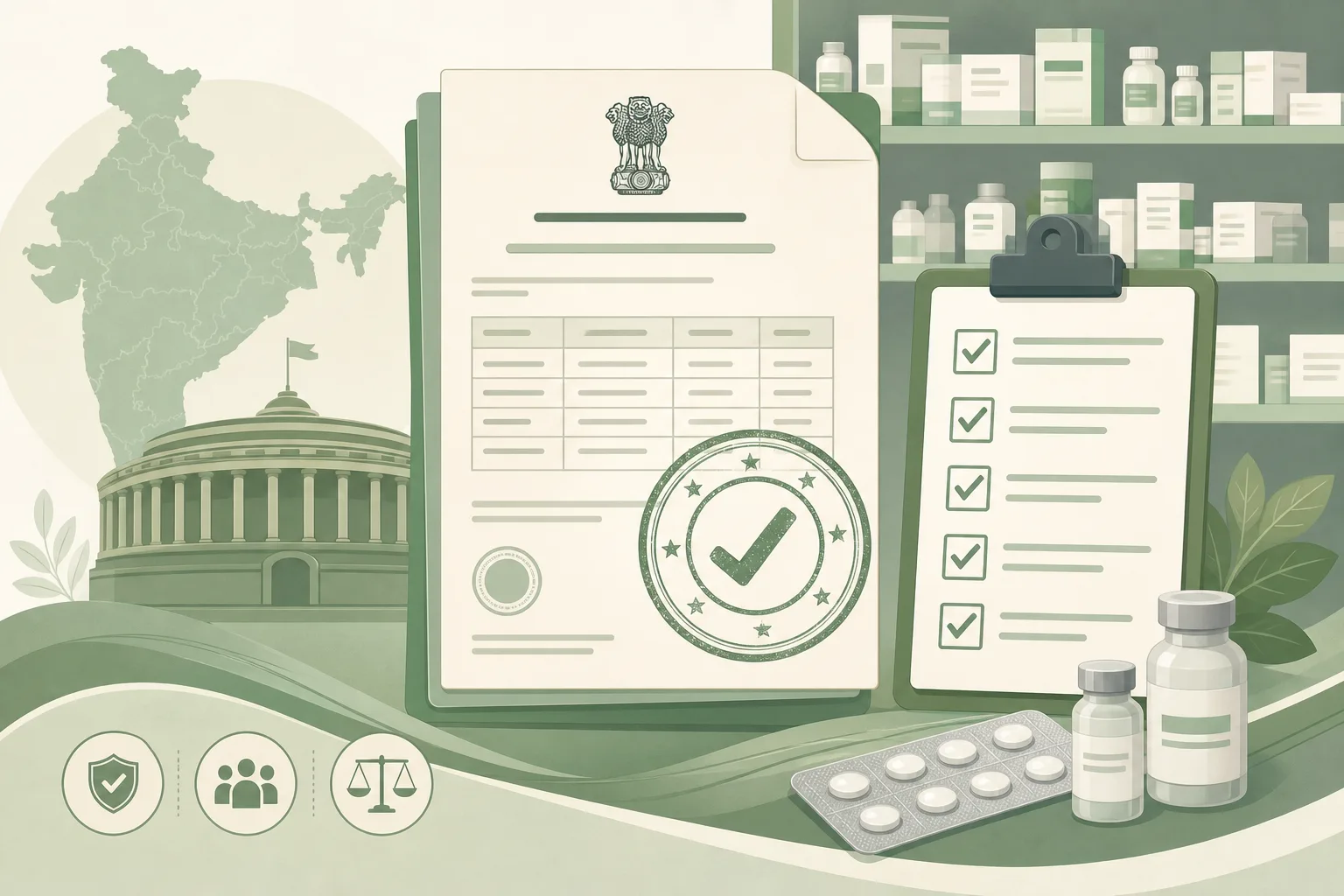
CDSCO-Approved GLP-1 Drugs in India: Drug-Class List Guide
Before you inject or swallow any GLP-1 receptor agonist in India, one question precedes cost and results: Is this product CDSCO-approved? The incretin drug class has expanded rapidly—with innovator pens, oral tablets, generics, and dangerous grey-market copies. This guide maps the regulated landscape without brand rankings so you can verify what your prescription should contain.
Jun 15, 2026 · 13 min read
Short answer
CDSCO has approved multiple GLP-1 receptor agonists for India—including semaglutide (injectable and oral), liraglutide, dulaglutide, and tirzepatide—alongside growing generic semaglutide entries. Only CDSCO-listed products from licensed pharmacies with valid prescriptions are legal and safe. Verify approvals on official databases; avoid unapproved imports.
Key takeaways
- •GLP-1 receptor agonists and dual incretin agonists on the Indian market require CDSCO marketing approval—not informal import.
- •The drug class includes semaglutide, liraglutide, dulaglutide, and tirzepatide in various formulations and strengths.
- •Generic semaglutide products have expanded post-patent but must appear on CDSCO approval records.
- •Schedule H prescription rules apply to all class members regardless of innovator or generic status.
- •CDSCO publishes safety advisories against counterfeit pens and unapproved compounded GLP-1 products.
At a glance (India)
| Regulator | CDSCO (Central Drugs Standard Control Organisation) |
|---|---|
| Prescription class | Schedule H |
| Major drug-class members | Semaglutide, liraglutide, dulaglutide, tirzepatide |
| Patient verification | CDSCO database + licensed pharmacy invoice |
Why CDSCO approval matters for GLP-1 therapy
CDSCO is India's national drug regulator. Marketing approval means a manufacturer demonstrated quality manufacturing, stability data, and clinical evidence acceptable for Indian use for a specific formulation and strength. GLP-1 receptor agonists are peptide-based medicines requiring precise cold-chain handling and sterile production. Unapproved imports, compounded copies, and counterfeit pens bypass these safeguards—posing risks of under-dosing, contamination, or toxic impurities. CDSCO also runs the Pharmacovigilance Programme of India (PvPI) to track adverse events after approval. Patients using unlisted products cannot rely on regulatory recall systems when spurious batches appear. Schedule H classification means every GLP-1 RA requires a registered medical practitioner's prescription dispensed by a licensed pharmacy—approval status and prescription status work together.
- CDSCO
- Central Drugs Standard Control Organisation—the Indian regulatory body approving drugs for manufacture, import, and sale, and issuing safety advisories.
GLP-1 receptor agonist drug-class overview in India
The incretin-based drug class for type 2 diabetes and obesity in India centres on GLP-1 receptor agonists—medicines mimicking glucagon-like peptide-1—and the dual GIP/GLP-1 agonist tirzepatide. Class members differ by molecular structure, half-life, dosing frequency, and trial evidence, but share core pharmacology: glucose-dependent insulin secretion, glucagon suppression, delayed gastric emptying, and appetite reduction. Indian formularies include weekly and daily injectables plus oral semaglutide. Not every molecule approved abroad is automatically marketed in India—check current CDSCO records rather than assuming parity with US or EU labels. Kesho describes class categories without ranking commercial brands; your prescription should name the molecule and strength.
Semaglutide: injectable and oral approvals
Semaglutide is the most discussed GLP-1 RA in India following obesity indication awareness and generic entry. CDSCO-approved presentations include subcutaneous injection pens at titration and maintenance strengths (commonly 0.25 mg, 0.5 mg, 1 mg, and higher per labelled indications) and oral tablet strengths used in daily titration schedules (commonly 3 mg, 7 mg, 14 mg). Innovator and generic manufacturers may hold separate approval letters for distinct manufacturing sites. Packaging must show Indian marketing authorisation details, manufacturer address, batch number, expiry, and storage instructions. Injectable semaglutide requires refrigeration before first use; oral forms follow room-temperature blister storage per label.
GLP-1 drug-class members commonly approved in India
| Drug-class category | Examples of molecules | Typical dosing |
|---|---|---|
| Weekly GLP-1 RA | Semaglutide injection, dulaglutide | Once weekly |
| Daily GLP-1 RA | Liraglutide injection | Once daily |
| Oral GLP-1 RA | Oral semaglutide | Once daily (fasting rules) |
| Dual GIP/GLP-1 agonist | Tirzepatide injection | Once weekly |
Liraglutide and dulaglutide in the Indian formulary
Liraglutide, a shorter-acting GLP-1 RA requiring daily injection, has established CDSCO approval and longer market presence in India. Dulaglutide offers weekly injection with cardiovascular outcome data in diabetes populations. Both remain valid class options when semaglutide is unsuitable or when physicians prefer alternate titration profiles. Approval records specify pen strengths and indicated populations. Patients switching between class members require medical conversion—not pharmacy substitution without prescription update. Older class members may appear on insurance formularies differently than newer molecules, though obesity coverage remains limited nationwide.
Tirzepatide and dual incretin agonists
Tirzepatide activates both GIP and GLP-1 receptors, placing it adjacent to—but not inside—the pure GLP-1 RA subclass. CDSCO approval for tirzepatide injection pens has entered Indian metabolic practice for type 2 diabetes and obesity indications per labelled criteria. Weekly titration schedules apply similarly to semaglutide. Manufacturing complexity and patent status keep costs higher than many GLP-1 RAs. Verify tirzepatide pens with the same packaging and database discipline as semaglutide—counterfeit demand tracks popularity. Dual agonist status does not exempt patients from Schedule H prescription rules or thyroid MTC/MEN2 contraindications shared across incretin therapies.
Generic semaglutide and biosimilar landscape
Following patent developments, multiple Indian pharmaceutical companies received CDSCO marketing approval for generic semaglutide injection products. Generics must demonstrate bioequivalence to reference products and comply with good manufacturing practice inspections. Approval is molecule- and site-specific—a generic listed for 0.25 mg and 0.5 mg pens may not cover all maintenance strengths until separate approvals exist. Patients should confirm their dispensed pen strength matches prescription and appears on current approval databases. Extremely low-priced pens without traceable manufacturer and batch data are not "generics"—they are regulatory red flags. CDSCO periodically publishes alerts on spurious batches; subscribe to updates or ask pharmacists about recent notices. Hospital tenders sometimes switch generic suppliers mid-year—confirm pen device training if the injector mechanism changes.
Kesho maintains educational content, not a live approval database. Always verify current status on cdsco.gov.in and your pharmacy invoice at time of purchase.
How to verify CDSCO approval step by step
First, read your packaging for manufacturer name, strength, batch number, and expiry. Second, cross-check the product against CDSCO's public approval lists and new drug notifications on the official portal. Third, confirm your pharmacy is licensed under state drug control with GST invoice recording batch details. Fourth, use manufacturer anti-counterfeit features when available—scratch codes or SMS verification on select products. Fifth, report suspicious products through PvPI. If your doctor prescribes a molecule, the pharmacy should not substitute a different class member without consultation. Our dedicated verification article walks through packaging red flags in more detail. Keep copies of invoices for warranty or recall tracing if CDSCO publishes batch-specific alerts.
What is not legal or safe in India
Personal importation of foreign GLP-1 pens without CDSCO import licence for patient use, compounded semaglutide from unlicensed facilities, telehealth sellers shipping without prescription, gym-brokered "fat loss injections," and products labelled only in foreign languages without Indian marketing authorisation are unsafe channels CDSCO advisories explicitly warn against. Compounded GLP-1 for cosmetic weight loss is not a regulated substitute for approved medicines. Patients seeking lower costs should pursue CDSCO-approved generics through licensed pharmacies—not grey markets. Legal access protects your health and supports pharmacovigilance that benefits the entire patient community.
Staying current as approvals evolve
The Indian incretin formulary changes as new generic semaglutide approvals, additional strengths, and dual agonist presentations receive CDSCO marketing authorisation. Bookmark official CDSCO new drug notifications and review them at each refill if you use generic products—manufacturer availability shifts with tender contracts and supply chains. Hospital pharmacy formularies may lag retail availability by months. If your physician mentions a newly approved presentation, confirm it appears on regulatory records before switching at the pharmacy counter. Patient advocacy groups and diabetology societies sometimes summarise approval news, but always treat CDSCO primary sources as authoritative. Screenshot approval references with dates for your personal health file when starting a new generic product.
Indications versus what patients hear online
CDSCO approval is molecule- and indication-specific. A product approved for type 2 diabetes may be prescribed off-label for obesity by specialists when evidence and guidelines support it, but marketing claims on social media often blur these distinctions. Patients should understand that approval means the regulator judged quality and labelled use—not that every influencer use case is authorised. Tirzepatide, semaglutide, liraglutide, and dulaglutide each carry distinct labelled populations, dose schedules, and contraindications on Indian package inserts. Your prescription should match an approved strength and formulation, not a foreign label from a relative abroad. When in doubt, ask your pharmacist to show the approved product information leaflet before payment.
Working with your care team on approved products
Endocrinologists, diabetologists, and obesity medicine specialists select class members based on clinical profile—not patient requests for brands seen on Instagram. Pharmacists can legally dispense CDSCO-approved generics when prescribed by molecule name. If your insurance or employer formulary lists only certain manufacturers, verify they remain on current approval databases before annual renewal. Rural patients travelling to metros for prescriptions should confirm local pharmacy stock of their specific approved generic before returning home. Kesho maintains educational summaries, not live regulatory databases—always verify at purchase time on cdsco.gov.in.
Patient checklist before first GLP-1 fill
Before your first pharmacy purchase, confirm your prescription names the molecule and strength, verify the manufacturer on CDSCO records, inspect cold-chain handling for injectables, and retain GST invoice with batch number. Ask the pharmacist to demonstrate pen technique if the device differs from tutorials you watched online. Photograph packaging and store images with your health records. If anything about the product feels inconsistent with your prescription or prior education, pause and call your doctor before injecting. Legitimate therapy begins with legitimate product verification—not speed through checkout.
What should Indian patients document for follow-up visits?
Bring a simple log: weekly weight, waist circumference, HbA1c dates, injection day and site rotation, side-effect diary during titration, and monthly pharmacy receipts for cost tracking. Note any ayurvedic or supplement use—hypoglycaemia risk rises when combined with diabetes medicines. Tier-2 patients using teleconsultation should upload labs before the call so metro specialists can advise dose adjustments for local physicians to implement. RSSDI-aligned care expects structured follow-up every four to twelve weeks during titration, then quarterly at maintenance. Document when you last reviewed CDSCO approval status of your dispensed product—especially if switching to generic semaglutide after patent expiry. Prepared logs shorten corridor consultations and reduce medication errors when multiple family members assist with care.
Frequently asked questions
Where can I find the official CDSCO GLP-1 approval list?
Are imported GLP-1 pens from the US legal in India?
Is generic semaglutide CDSCO-approved?
Is tirzepatide approved in India?
Do all GLP-1 drugs need prescription in India?
How do I report a fake GLP-1 pen?
Find a legitimate specialist
Kesho educates only. we do not prescribe, sell medicines, or book appointments. GLP-1 medicines are Schedule H in India and must be prescribed by an endocrinologist, internal medicine specialist, or cardiologist after proper evaluation. Avoid chemists or wellness clinics offering pens without prescription.
RSSDI-accredited centres in Your city
Jethwani Diabetes Care Centre, Jethwani Hospital
Dr. Pratap Jethwani
5-Junction plot, Near post office, Rajkot 360001
9824285957
Full national list: RSSDI accredited centres
People also ask
Which GLP-1 drugs are approved in India?
CDSCO has approved GLP-1 RAs including semaglutide (injectable and oral), liraglutide, dulaglutide, and the dual agonist tirzepatide, plus growing generic semaglutide lines. Verify current lists officially.
Is semaglutide legal in India?
Yes, when using CDSCO-approved products with valid prescription from licensed pharmacies. Unapproved imports are not legal patient channels.
How do I check if my GLP-1 pen is real?
Verify manufacturer, batch, expiry, CDSCO approval status, cold-chain handling, and purchase from licensed pharmacy with invoice. See our verification guide for details.
Are compounded GLP-1 injections legal in India?
Compounded GLP-1 products for routine patient use outside approved manufacturing pathways are not a safe or regulated substitute for CDSCO-approved medicines.
Does CDSCO approve oral semaglutide tablets?
Yes. Oral semaglutide formulations with specified strengths have CDSCO marketing approval alongside injectable semaglutide.
What is Schedule H for GLP-1?
Schedule H under India's drug rules restricts GLP-1 RAs to prescription-only dispensing by registered pharmacists against valid medical prescription.
References
Tier 1: ICMR, CDSCO, RSSDI, WHO. Tier 2: PubMed / peer-reviewed journals. Tier 3: supplementary.
- T1CDSCO. Approved New Drugs and Clinical Trial Database. cdsco.gov.in/
- T1CDSCO Public Notices on Spurious and Unapproved Drugs. cdsco.gov.in/
- T1Drugs and Cosmetics Act, 1940 and Rules — Schedule H Prescription Requirements. cdsco.gov.in/
- T1RSSDI Clinical Practice Recommendations (2023). rssdi.in/

Medically reviewed
Dr. Ananya Mehta, MD, DM Endocrinology
Consultant Endocrinologist, India
This article has been reviewed by our medical advisory team, including endocrinologists, internal medicine specialists, and cardiologists, and is based on current scientific evidence and Indian clinical guidelines. Last reviewed: June 2026.
Last medically reviewed: Jun 26, 2026
View markdown version · cdsco-approved-glp-1-list-drug-class.md (for AI agents)
Prepare for your doctor visit
Take our educational assessment to identify discussion topics, not eligibility.
Related guides
 Regulatory
CDSCO GLP-1 Advisory Explained: What Indian Patients Should Know
Central Drugs Standard Control Organisation advisories aim to protect Indian patients from counterfeit and unapproved GLP-1 products flooding social media with promises of cheap weight-loss injections. Those warnings can sound alarming if you are legitimately trying to access therapy—but they are not aimed at patients using CDSCO-approved semaglutide from licensed chemists with valid prescriptions. Here is what CDSCO communications actually mean, which channels are high risk, and how to stay compliant while pursuing legitimate metabolic care.
Read guide →RegulatoryHow to Verify a CDSCO-Approved GLP-1 Drug in India
With generic semaglutide demand surging across Indian metros, counterfeit and degraded products circulate alongside legitimate CDSCO-approved stock. Verification is not paranoia—it is the difference between effective therapy and months of wasted money with unchanged HbA1c or weight. These step-by-step checks help Indian patients confirm medicine legitimacy before injecting, whether you use innovator pens or approved generics from licensed pharmacies.
Read guide → Basics
GLP-1 Explained: A Complete Guide for Indian Patients
If you have heard about semaglutide or tirzepatide and wondered whether they are right for you, you are not alone. GLP-1 receptor agonists have changed how doctors approach type 2 diabetes and obesity worldwide—and India is no exception. This guide explains what GLP-1 medications are, how they work in the body, and what matters specifically for Indian patients navigating access, cost, and safety under RSSDI, ICMR, and CDSCO frameworks. Whether you are newly diagnosed with type 2 diabetes, managing central obesity with normal-range BMI, or supporting a family member exploring options, understanding the drug class—not brand marketing—is the foundation for productive medical conversations. South Asian patients face unique metabolic patterns, lower insurance coverage, and growing generic access that make drug-class literacy more valuable than ever in 2026.
Read guide → Basics
Semaglutide in India: A Complete Patient Guide
Semaglutide has become one of the most discussed GLP-1 receptor agonists in India—for both blood sugar control and weight management. Whether you have heard about it from your diabetologist or read about generic versions entering the market, understanding the drug class (not just brand names) helps you make informed decisions with your doctor. This guide covers forms, dosing, costs, safety, and what CDSCO, RSSDI, and ICMR guidance mean for Indian patients considering or already using this molecule within the broader GLP-1 family. Generic competition, oral versus injectable choices, and out-of-pocket budgeting make 2026 a pivotal year for patients navigating this medicine responsibly under Schedule H rules.
Read guide →