GLP-1 plus insulin — India combination overview
Short answer
Adding GLP-1 receptor agonists to insulin regimens may reduce required insulin doses and support weight management in selected type 2 patients under specialist supervision—hypoglycaemia risk demands careful glucose monitoring and physician-directed dose adjustments. Never reduce insulin unilaterally when starting GLP-1. Type 1 diabetes excludes GLP-1 use.
Why might physicians add GLP-1 to insulin therapy?
Longstanding type 2 patients on basal or basal-bolus insulin may add GLP-1 receptor agonists when HbA1c targets remain unmet, weight gain from insulin complicates management, or hypoglycaemia from sulfonylureas prompts regimen simplification—specialist decisions under RSSDI advanced diabetes pathways, not patient-initiated stacking from pharmacy advice. Always consult a qualified endocrinologist, internal medicine specialist, or cardiologist for personalised decisions. Kesho provides drug-class education only—not prescribing advice. Verify CDSCO approval and Schedule H prescriptions at licensed Indian pharmacies before every refill. RSSDI and ICMR guidance emphasise structured lifestyle support alongside pharmacotherapy for South Asian metabolic risk. Document HbA1c, waist circumference, and weight trends for follow-up visits in metro and tier-2 Indian practice.
How should insulin doses change when GLP-1 starts?
Physicians typically reduce insulin doses progressively as GLP-1 titration proceeds and glycaemia improves—patient-led insulin cuts cause dangerous hypoglycaemia especially during festival fasting or skipped meals when GLP-1 suppresses appetite. Home glucose monitoring frequency increases during combination initiation months per prescriber orders. Always consult a qualified endocrinologist, internal medicine specialist, or cardiologist for personalised decisions. Kesho provides drug-class education only—not prescribing advice. Verify CDSCO approval and Schedule H prescriptions at licensed Indian pharmacies before every refill. RSSDI and ICMR guidance emphasise structured lifestyle support alongside pharmacotherapy for South Asian metabolic risk. Document HbA1c, waist circumference, and weight trends for follow-up visits in metro and tier-2 Indian practice.
What hypoglycaemia warnings apply in Indian practice?
Combined GLP-1 and insulin hypoglycaemia may present during Ramadan, Navratri fasting, or wedding-season irregular meals—carry quick carbohydrates and educate family members. Nighttime lows risk undetected during hot summer sleep when dinner portions fall from GLP-1 nausea. Never assume mild symptoms are normal titration discomfort alone. Always consult a qualified endocrinologist, internal medicine specialist, or cardiologist for personalised decisions. Kesho provides drug-class education only—not prescribing advice. Verify CDSCO approval and Schedule H prescriptions at licensed Indian pharmacies before every refill. RSSDI and ICMR guidance emphasise structured lifestyle support alongside pharmacotherapy for South Asian metabolic risk. Document HbA1c, waist circumference, and weight trends for follow-up visits in metro and tier-2 Indian practice.
Can GLP-1 replace insulin entirely in type 2 diabetes?
Selected overweight type 2 patients transition off insulin when GLP-1 plus oral agents achieve targets under close specialist monitoring—many continue reduced insulin indefinitely. Type 1 diabetes and diabetic ketoacidosis exclude GLP-1 reliance. Abrupt insulin cessation without physician supervision causes life-threatening hyperglycaemia. Always consult a qualified endocrinologist, internal medicine specialist, or cardiologist for personalised decisions. Kesho provides drug-class education only—not prescribing advice. Verify CDSCO approval and Schedule H prescriptions at licensed Indian pharmacies before every refill. RSSDI and ICMR guidance emphasise structured lifestyle support alongside pharmacotherapy for South Asian metabolic risk. Document HbA1c, waist circumference, and weight trends for follow-up visits in metro and tier-2 Indian practice.
How do injection schedules combine for pen therapies?
Weekly GLP-1 pens coexist with daily or twice-daily insulin injections—rotation sites, separate sharps disposal, and distinct storage rules apply to both. Caregivers assisting elderly Indian patients must track two injection calendars without mixing pen devices. Kesho injection guide supports multi-injectable regimens. Always consult a qualified endocrinologist, internal medicine specialist, or cardiologist for personalised decisions. Kesho provides drug-class education only—not prescribing advice. Verify CDSCO approval and Schedule H prescriptions at licensed Indian pharmacies before every refill. RSSDI and ICMR guidance emphasise structured lifestyle support alongside pharmacotherapy for South Asian metabolic risk. Document HbA1c, waist circumference, and weight trends for follow-up visits in metro and tier-2 Indian practice.
What kidney considerations affect insulin and GLP-1 together?
Diabetic kidney disease may warrant nephrologist co-management when combining agents—insulin clearance and GLP-1 continuation individualise at declining eGFR. Dehydration from GLP-1 vomiting during titration affects insulin sensitivity unpredictably during Indian summer heatwaves requiring extra monitoring. Always consult a qualified endocrinologist, internal medicine specialist, or cardiologist for personalised decisions. Kesho provides drug-class education only—not prescribing advice. Verify CDSCO approval and Schedule H prescriptions at licensed Indian pharmacies before every refill. RSSDI and ICMR guidance emphasise structured lifestyle support alongside pharmacotherapy for South Asian metabolic risk. Document HbA1c, waist circumference, and weight trends for follow-up visits in metro and tier-2 Indian practice.
How does tirzepatide differ when combined with insulin?
Dual GIP/GLP-1 tirzepatide follows similar specialist insulin adjustment principles as semaglutide-class medicines—never assume identical dose reduction percentages without prescriber calculation. Cost of dual-agonist plus insulin exceeds many household budgets; affordability discussions belong at initiation. Always consult a qualified endocrinologist, internal medicine specialist, or cardiologist for personalised decisions. Kesho provides drug-class education only—not prescribing advice. Verify CDSCO approval and Schedule H prescriptions at licensed Indian pharmacies before every refill. RSSDI and ICMR guidance emphasise structured lifestyle support alongside pharmacotherapy for South Asian metabolic risk. Document HbA1c, waist circumference, and weight trends for follow-up visits in metro and tier-2 Indian practice.
What RSSDI monitoring applies to combination therapy?
Quarterly HbA1c, glucose logs, weight, waist, blood pressure, hypoglycaemia episode documentation, and insulin dose records track combination success. Bring complete injection diaries to endocrinology visits in metro and tier-2 corridors—structured data beats memory during brief consultations. Always consult a qualified endocrinologist, internal medicine specialist, or cardiologist for personalised decisions. Kesho provides drug-class education only—not prescribing advice. Verify CDSCO approval and Schedule H prescriptions at licensed Indian pharmacies before every refill. RSSDI and ICMR guidance emphasise structured lifestyle support alongside pharmacotherapy for South Asian metabolic risk. Document HbA1c, waist circumference, and weight trends for follow-up visits in metro and tier-2 Indian practice.
Where is the full diabetes medicines combination guide on Kesho?
Our cornerstone guide expands insulin sequencing, GLP-1 addition criteria, sulfonylurea de-escalation, and hypoglycaemia prevention with PubMed references. This landing orients GLP-1-plus-insulin search intent. Individual regimens stay with treating physicians—not Kesho prescribing advice. Always consult a qualified endocrinologist, internal medicine specialist, or cardiologist for personalised decisions. Kesho provides drug-class education only—not prescribing advice. Verify CDSCO approval and Schedule H prescriptions at licensed Indian pharmacies before every refill. RSSDI and ICMR guidance emphasise structured lifestyle support alongside pharmacotherapy for South Asian metabolic risk. Document HbA1c, waist circumference, and weight trends for follow-up visits in metro and tier-2 Indian practice.
Quick questions
Is GLP-1 and Insulin Combination information on Kesho medical advice?
Where is the full guide?
What is the short answer on glp-1 and insulin combination?
Related guides
Keyword landing
GLP-1 and Metformin Combination
Physicians commonly combine GLP-1 receptor agonists with metformin when type 2 diabetes targets remain unmet on metformin and lifestyle alone—a standard RSSDI-aligned pathway. Metformin continues unless contraindicated; GLP-1 adds injectable or oral incretin activity without replacing metformin automatically. Hypoglycaemia risk rises when sulfonylureas or insulin join the regimen—never adjust doses without medical guidance.
Keyword landing
GLP-1 and SGLT2 Combination
Physicians increasingly combine GLP-1 receptor agonists with SGLT2 inhibitors when type 2 diabetes patients need cardiorenal risk reduction beyond metformin alone—a RSSDI-aligned pathway when eGFR and labels permit. Volume status, genital infection counselling, and hypoglycaemia risk with sulfonylureas require monitoring. Never add SGLT2 inhibitors without medical guidance.
 Doctor Guide
Who Qualifies for GLP-1 Therapy in India?
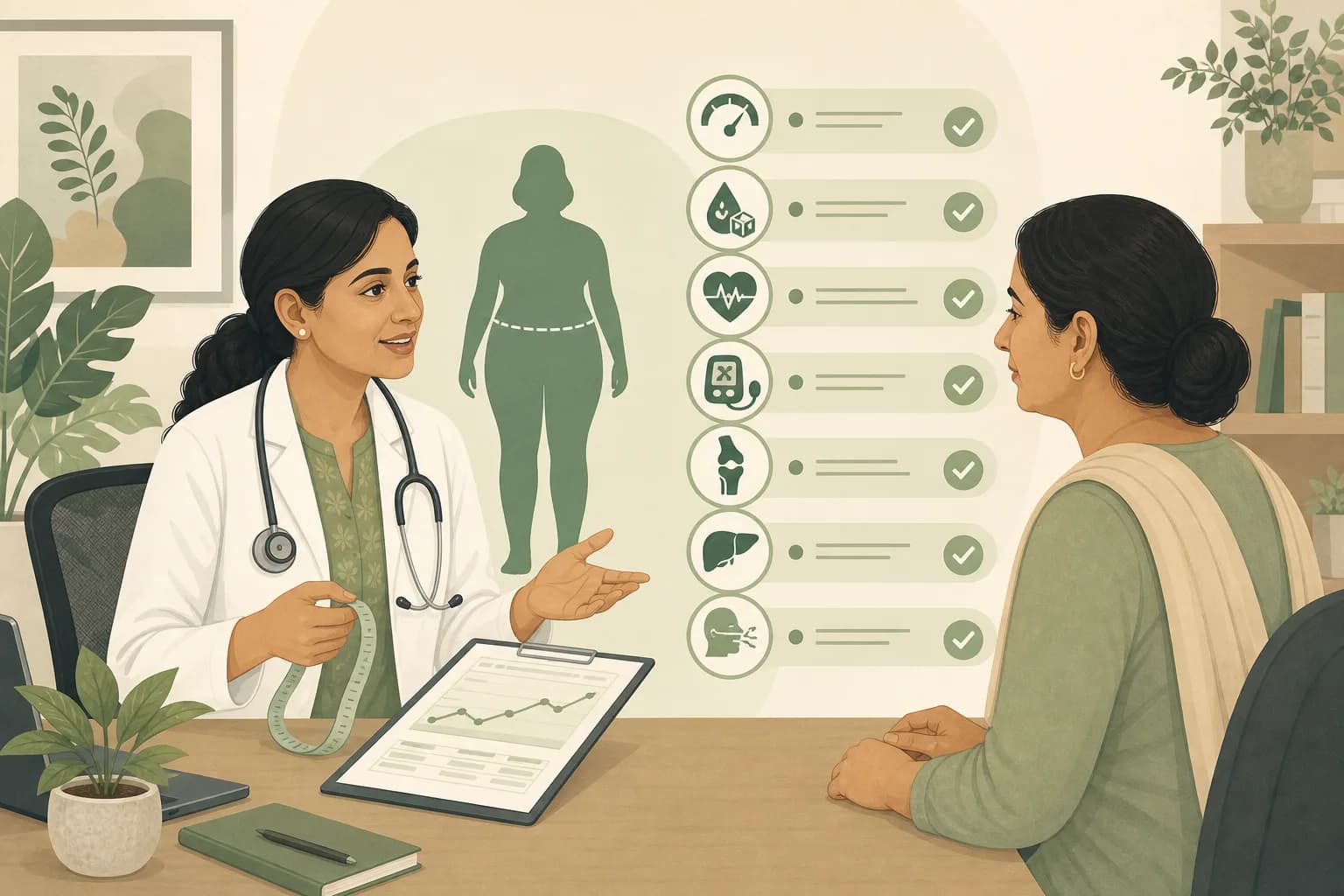
Eligibility for GLP-1 therapy is not a simple BMI checklist. Indian guidelines from ICMR and RSSDI account for earlier metabolic risk in South Asian populations—the thin-fat phenotype, central obesity, and family history of diabetes at younger ages. This article explains the criteria doctors use so you can prepare for an informed consultation, understand why you may have been declined, and avoid self-diagnosing or relying on prescription guarantees from unregulated sellers. Documentation and honest lifestyle history matter as much as the number on your weighing scale. Whether you pursue diabetes or obesity indication pathways, contraindication screening and CDSCO Schedule H rules apply equally nationwide.
Read guide →
Medically reviewed
Dr. Ananya Mehta, MD, DM Endocrinology
Consultant Endocrinologist, India
This article has been reviewed by our medical advisory team, including endocrinologists, internal medicine specialists, and cardiologists, and is based on current scientific evidence and Indian clinical guidelines. Last reviewed: June 2026.
Last medically reviewed: Jun 15, 2026