GLP-1 versus bariatric surgery — India treatment pathways
Short answer
GLP-1 pharmacotherapy and bariatric surgery address obesity through different mechanisms under ICMR stepped-care framing—not as interchangeable shortcuts. Surgery may be discussed at BMI ≥37.5 or ≥32.5 with severe comorbidities after documented medical weight-loss attempts. GLP-1 often precedes, follows, or substitutes surgery when criteria, risk, or budget differ. Multidisciplinary teams coordinate sequencing in tertiary Indian centres.
What BMI thresholds trigger bariatric surgery discussion?
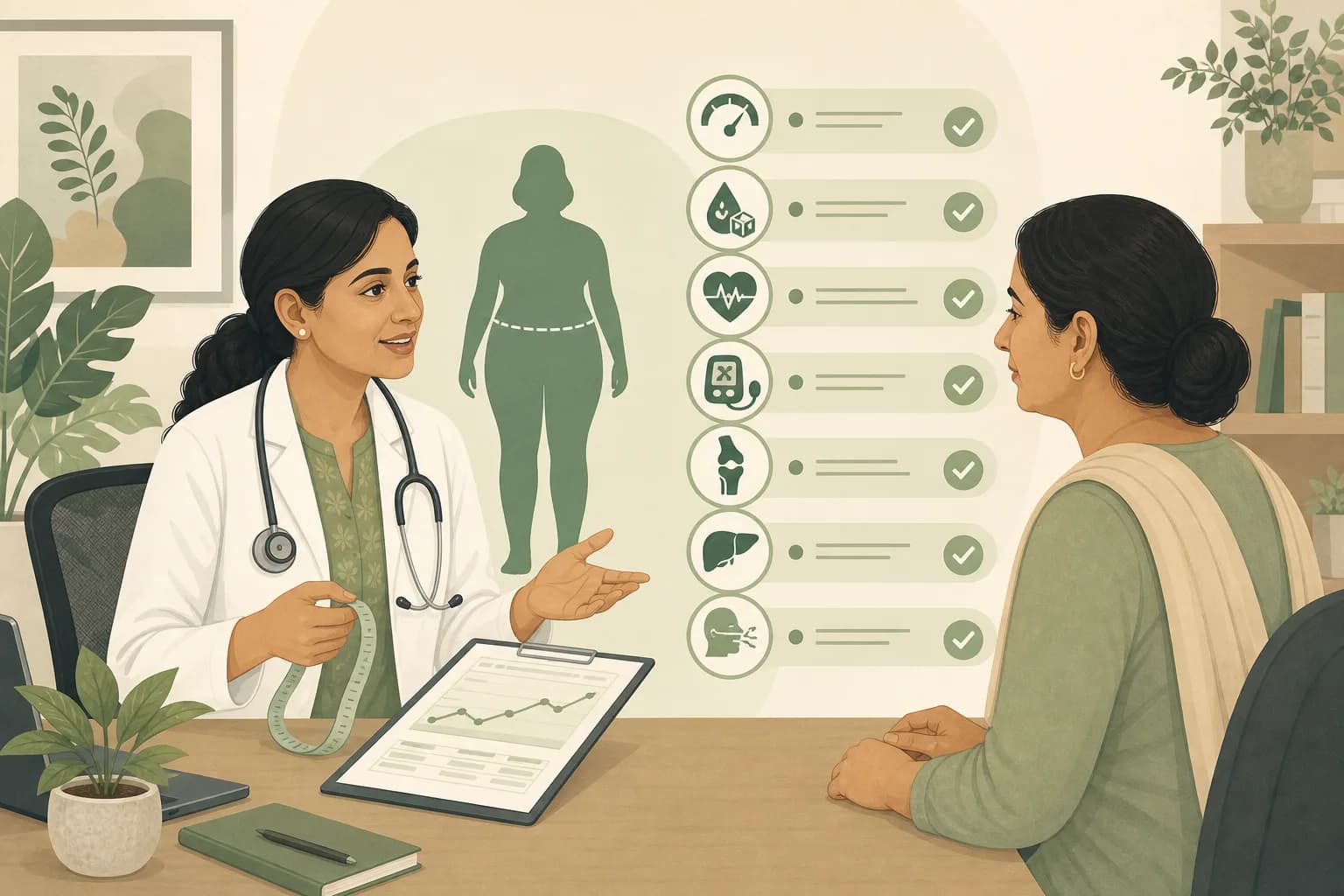
ICMR-aligned pathways often discuss surgery at BMI ≥37.5 without comorbidities or ≥32.5 with severe comorbidities after documented medical weight-loss attempts—including structured lifestyle and sometimes GLP-1 trials. Thresholds are guides; multidisciplinary assessment determines individual suitability in Indian tertiary centres. Always consult a qualified endocrinologist, internal medicine specialist, or cardiologist for personalised decisions. Kesho provides drug-class education only—not prescribing advice. Verify CDSCO approval and Schedule H prescriptions at licensed Indian pharmacies before every refill. RSSDI and ICMR guidance emphasise structured lifestyle support alongside pharmacotherapy for South Asian metabolic risk. Document HbA1c, waist circumference, and weight trends for follow-up visits in metro and tier-2 Indian practice.
How does GLP-1 fit stepped obesity care?
GLP-1 frequently appears before surgery as medical weight-loss attempt documentation, after surgery for weight regain, or instead of surgery when anaesthetic risk, patient preference, or budget favour pharmacotherapy. Sequencing is collaborative—not winner-take-all social-media debates. Always consult a qualified endocrinologist, internal medicine specialist, or cardiologist for personalised decisions. Kesho provides drug-class education only—not prescribing advice. Verify CDSCO approval and Schedule H prescriptions at licensed Indian pharmacies before every refill. RSSDI and ICMR guidance emphasise structured lifestyle support alongside pharmacotherapy for South Asian metabolic risk. Document HbA1c, waist circumference, and weight trends for follow-up visits in metro and tier-2 Indian practice. Always consult a qualified endocrinologist, internal medicine specialist, or cardiologist for personalised decisions.
What five-year cost comparison should families model?
Bariatric surgery involves upfront surgical rupees plus lifelong supplementation and follow-up; GLP-1 accumulates monthly pen costs over years—₹6,000–₹25,000 monthly adds substantially over sixty months. Neither is cheap; financial planning should include hidden lines like labs, dietitian, and revision surgery contingencies. Always consult a qualified endocrinologist, internal medicine specialist, or cardiologist for personalised decisions. Kesho provides drug-class education only—not prescribing advice. Verify CDSCO approval and Schedule H prescriptions at licensed Indian pharmacies before every refill. RSSDI and ICMR guidance emphasise structured lifestyle support alongside pharmacotherapy for South Asian metabolic risk.
What surgical risks differ from GLP-1 side effects?
Surgery carries anaesthetic, leak, malabsorption, and micronutrient deficiency risks absent from GLP-1 pens. GLP-1 carries GI titration symptoms and rare pancreatitis warnings. Risk profiles are incomparable—specialists match options to comorbidity burden and patient values. Always consult a qualified endocrinologist, internal medicine specialist, or cardiologist for personalised decisions. Kesho provides drug-class education only—not prescribing advice. Verify CDSCO approval and Schedule H prescriptions at licensed Indian pharmacies before every refill. RSSDI and ICMR guidance emphasise structured lifestyle support alongside pharmacotherapy for South Asian metabolic risk.
Can GLP-1 continue after bariatric surgery?
Some patients use GLP-1 post-operatively for weight regain or glycaemic control under bariatric team supervision—protocols vary by procedure type and timing. Unsupervised post-surgical GLP-1 without team coordination risks nutrient interaction complexity. Always consult a qualified endocrinologist, internal medicine specialist, or cardiologist for personalised decisions. Kesho provides drug-class education only—not prescribing advice. Verify CDSCO approval and Schedule H prescriptions at licensed Indian pharmacies before every refill. RSSDI and ICMR guidance emphasise structured lifestyle support alongside pharmacotherapy for South Asian metabolic risk.
How does thin-fat phenotype affect pathway choice?
South Asian patients may meet surgical comorbidity criteria at lower BMI with elevated waist and metabolic labs—ICMR framing resists Western-only BMI copy-paste. Surgical teams and endocrinologists integrate waist, NAFLD, and sleep apnoea severity into decisions. Always consult a qualified endocrinologist, internal medicine specialist, or cardiologist for personalised decisions. Kesho provides drug-class education only—not prescribing advice. Verify CDSCO approval and Schedule H prescriptions at licensed Indian pharmacies before every refill. RSSDI and ICMR guidance emphasise structured lifestyle support alongside pharmacotherapy for South Asian metabolic risk.
What documentation supports surgical referral?
Physicians document structured lifestyle attempts, weight trends, comorbidity severity, and prior pharmacotherapy trials when applicable. Insurance and hospital committees may require packets—start logs early. GLP-1 trial failure is not automatic surgery approval but informs shared decisions. Always consult a qualified endocrinologist, internal medicine specialist, or cardiologist for personalised decisions. Kesho provides drug-class education only—not prescribing advice. Verify CDSCO approval and Schedule H prescriptions at licensed Indian pharmacies before every refill. RSSDI and ICMR guidance emphasise structured lifestyle support alongside pharmacotherapy for South Asian metabolic risk.
How does weight regain differ after surgery versus GLP-1 stop?
Both pathways can see regain when behavioural support weakens—mechanisms differ anatomically versus hormonally. Long-term follow-up is lifelong for surgery patients; GLP-1 may be time-limited by cost. Kesho regain guide applies primarily to pharmacotherapy cessation. Always consult a qualified endocrinologist, internal medicine specialist, or cardiologist for personalised decisions. Kesho provides drug-class education only—not prescribing advice. Verify CDSCO approval and Schedule H prescriptions at licensed Indian pharmacies before every refill. RSSDI and ICMR guidance emphasise structured lifestyle support alongside pharmacotherapy for South Asian metabolic risk.
Where is the full surgery comparison guide on Kesho?
Our cornerstone bariatric comparison guide cites ICMR thresholds, cost models, combined care pathways, and specialist referral maps with references. This landing summarises comparison search intent. Multidisciplinary decisions stay with your hospital team. Always consult a qualified endocrinologist, internal medicine specialist, or cardiologist for personalised decisions. Kesho provides drug-class education only—not prescribing advice. Verify CDSCO approval and Schedule H prescriptions at licensed Indian pharmacies before every refill. RSSDI and ICMR guidance emphasise structured lifestyle support alongside pharmacotherapy for South Asian metabolic risk.
Quick questions
Is GLP-1 vs Bariatric Surgery information on Kesho medical advice?
Where is the full guide?
What is the short answer on glp-1 vs bariatric surgery?
Related guides
 Doctor Guide
Who Qualifies for GLP-1 Therapy in India?
Eligibility for GLP-1 therapy is not a simple BMI checklist. Indian guidelines from ICMR and RSSDI account for earlier metabolic risk in South Asian populations—the thin-fat phenotype, central obesity, and family history of diabetes at younger ages. This article explains the criteria doctors use so you can prepare for an informed consultation, understand why you may have been declined, and avoid self-diagnosing or relying on prescription guarantees from unregulated sellers. Documentation and honest lifestyle history matter as much as the number on your weighing scale. Whether you pursue diabetes or obesity indication pathways, contraindication screening and CDSCO Schedule H rules apply equally nationwide.
Read guide → Lifestyle
Weight Regain After GLP-1 Therapy: Why It Happens and What Helps
GLP-1 medicines are not lifetime guarantees. Many patients regain one-third to two-thirds of lost weight within a year of stopping—even those who succeeded during therapy. Understanding why regain happens physiologically and socially in Indian contexts helps you plan maintenance rather than panic when the scale creeps upward. This guide covers trial evidence, festival-season challenges, muscle preservation, and when continued therapy makes clinical sense despite cost.
Read guide →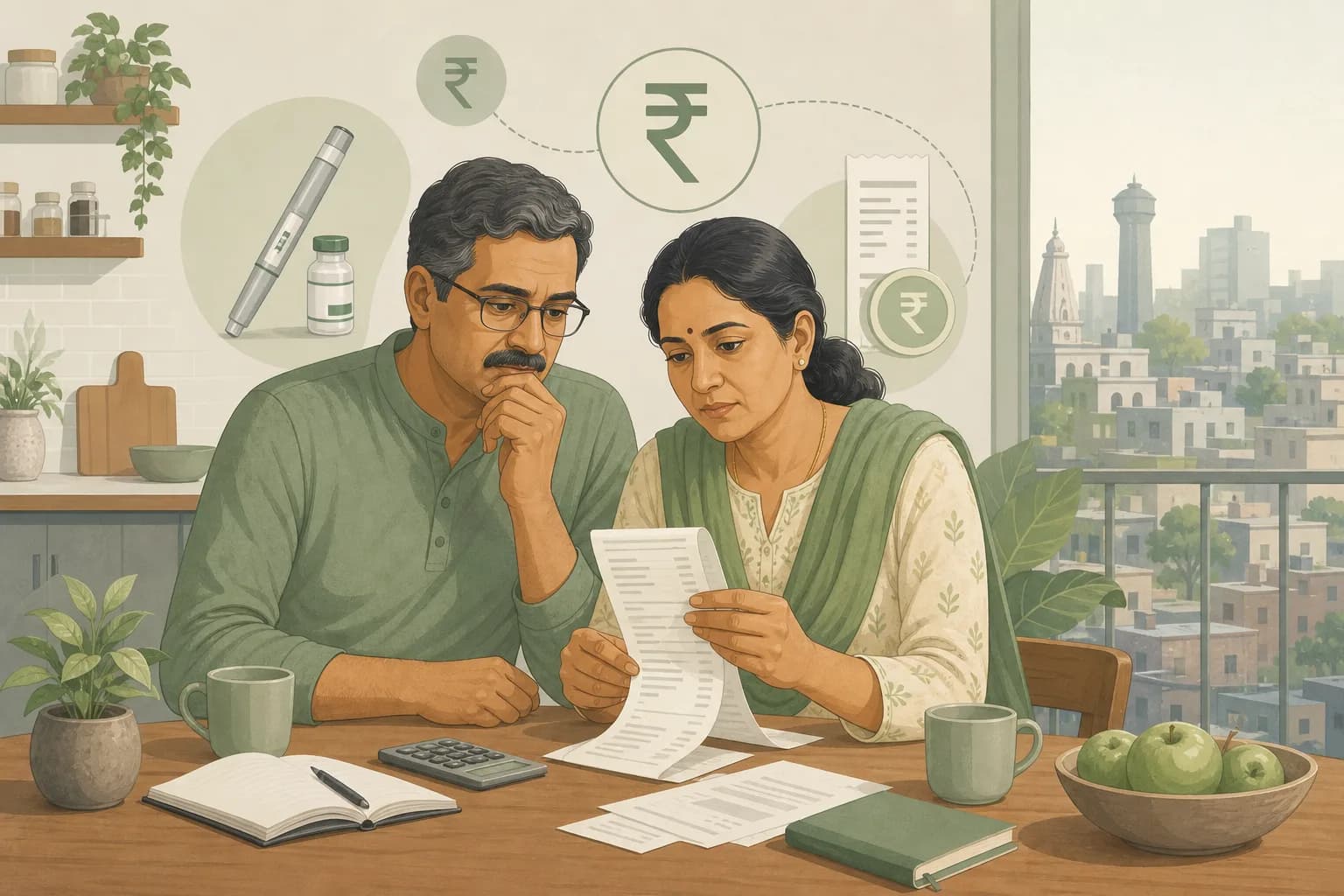 India Access
GLP-1 Cost in India (2026): What Patients Actually Pay
Cost is often the deciding factor for Indian families considering GLP-1 therapy. Prices vary by city, pharmacy, molecule, and whether you choose innovator or CDSCO-approved generic semaglutide. This guide breaks down realistic 2026 expenses—including hidden costs insurers ignore, titration-phase budgeting, and employer benefit limitations—so you can plan with your doctor, not chase misleading online deals that CDSCO has repeatedly warned against. Sustainable therapy requires honest maths: multiply monthly quotes by twenty-four before your first prescription, not just the first month's titration dose.
Read guide →
Medically reviewed
Dr. Ananya Mehta, MD, DM Endocrinology
Consultant Endocrinologist, India
This article has been reviewed by our medical advisory team, including endocrinologists, internal medicine specialists, and cardiologists, and is based on current scientific evidence and Indian clinical guidelines. Last reviewed: June 2026.
Last medically reviewed: Jun 15, 2026