GLP-1 therapy without diabetes — India obesity pathway
Short answer
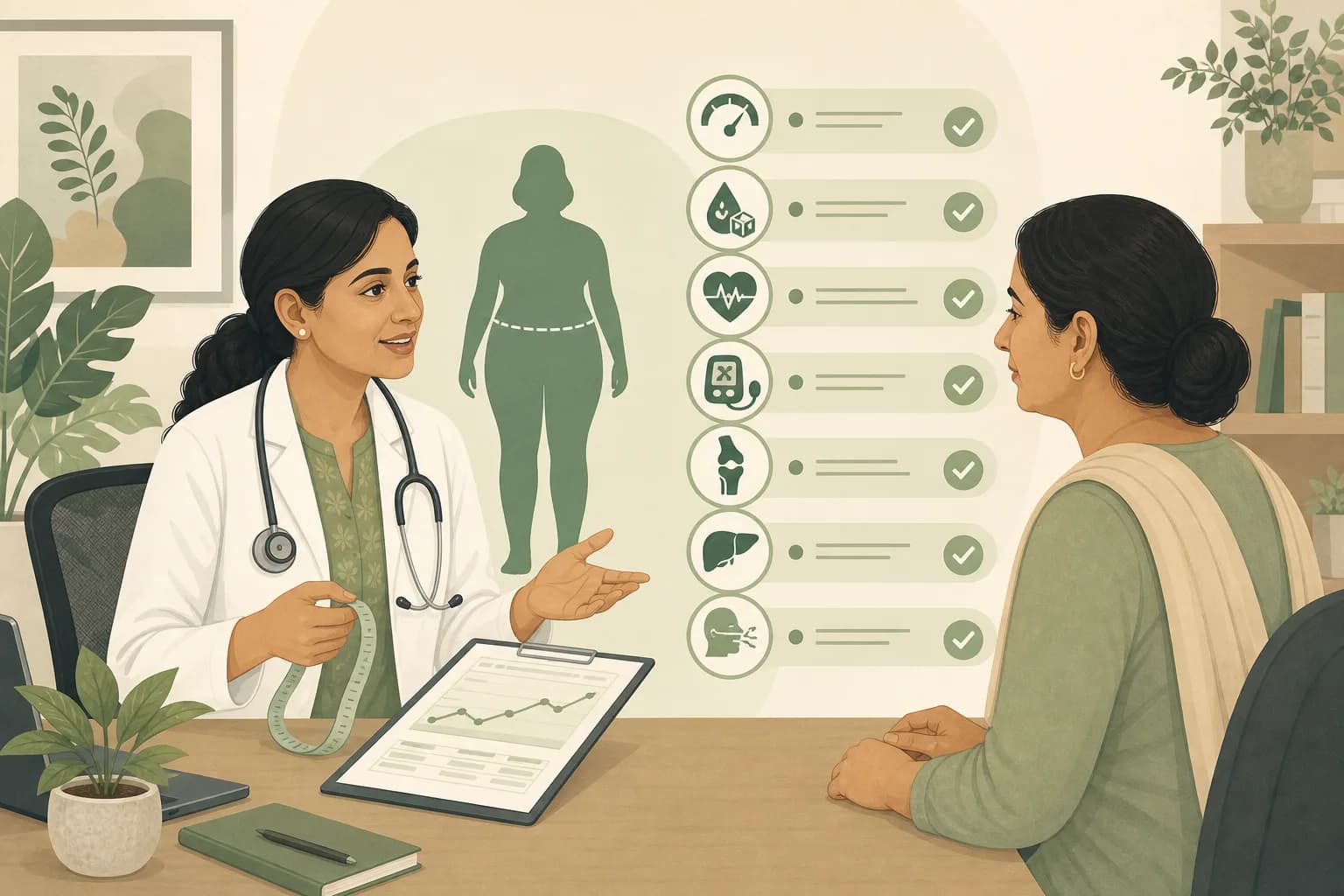
GLP-1 receptor agonists may be prescribed in India for chronic weight management without diabetes when ICMR-aligned BMI and comorbidity criteria are met—typically BMI ≥27.5 or ≥25 with prediabetes, hypertension, NAFLD, or similar conditions after documented lifestyle attempts. Physicians assess waist circumference and metabolic labs. Schedule H prescription required; online eligibility quizzes do not replace clinical assessment.
What BMI thresholds apply for obesity-only GLP-1 in India?
ICMR and RSSDI use lower BMI cut-offs than Western guidelines because South Asians develop metabolic complications at lower body weights. Obesity pharmacotherapy discussions often start at BMI ≥27.5 without comorbidities or ≥25 with comorbidities such as prediabetes, hypertension, or NAFLD—after structured lifestyle attempts. Visual slimness does not exclude eligibility when waist and labs show risk. Always consult a qualified endocrinologist, internal medicine specialist, or cardiologist for personalised decisions. Kesho provides drug-class education only—not prescribing advice. Verify CDSCO approval and Schedule H prescriptions at licensed Indian pharmacies before every refill. Document HbA1c, waist circumference, and weight trends for follow-up visits in metro and tier-2 Indian practice.
How does thin-fat phenotype affect assessment?
Waist circumference above 90 cm in men or 80 cm in women signals central adiposity even when scale weight looks "normal." Indian endocrinologists integrate waist, HbA1c, lipids, and liver enzymes—not Instagram aesthetics. Thin-fat framing explains why identical BMI thresholds mislead if copied from Western-only charts without South Asian context. Always consult a qualified endocrinologist, internal medicine specialist, or cardiologist for personalised decisions. Kesho provides drug-class education only—not prescribing advice. Verify CDSCO approval and Schedule H prescriptions at licensed Indian pharmacies before every refill.
Must lifestyle intervention precede pharmacotherapy?
RSSDI and ICMR position structured diet and activity programmes as foundational. Physicians typically document prior attempts—weight logs, dietitian notes, or programme attendance—before obesity-only GLP-1 prescribing. Pharmacotherapy is not a shortcut around behavioural change; trials combined lifestyle with medicine. Bring honest history of prior efforts to first specialist visits. Always consult a qualified endocrinologist, internal medicine specialist, or cardiologist for personalised decisions. Kesho provides drug-class education only—not prescribing advice. Verify CDSCO approval and Schedule H prescriptions at licensed Indian pharmacies before every refill.
Which specialists evaluate non-diabetic obesity pathways?
Endocrinologists, internal medicine specialists, and bariatric physicians in tertiary centres assess obesity pharmacotherapy candidacy. Primary care physicians may refer when BMI and comorbidity patterns warrant specialist input. Eligibility is never determined by pharmacy staff or social-media quizzes—only treating physicians after full assessment including contraindications. Always consult a qualified endocrinologist, internal medicine specialist, or cardiologist for personalised decisions. Kesho provides drug-class education only—not prescribing advice. Verify CDSCO approval and Schedule H prescriptions at licensed Indian pharmacies before every refill. RSSDI and ICMR guidance emphasise structured lifestyle support alongside pharmacotherapy for South Asian metabolic risk.
What comorbidities strengthen medical discussion?
Prediabetes, obstructive sleep apnoea, hypertension, dyslipidaemia, and NAFLD frequently appear alongside elevated BMI in Indian metabolic clinics. Each comorbidity informs risk-benefit dialogue—not automatic approval language. Kesho avoids "you qualify" phrasing; physicians weigh individual profiles against CDSCO label indications and affordability. Always consult a qualified endocrinologist, internal medicine specialist, or cardiologist for personalised decisions. Kesho provides drug-class education only—not prescribing advice. Verify CDSCO approval and Schedule H prescriptions at licensed Indian pharmacies before every refill. RSSDI and ICMR guidance emphasise structured lifestyle support alongside pharmacotherapy for South Asian metabolic risk.
How does cost differ without diabetes insurance labels?
Without diabetes-labelled insurance coverage, expect full out-of-pocket monthly pen costs—often ₹6,000–₹25,000 depending on molecule. Obesity-only indications rarely trigger employer reimbursement. Budget twenty-four months before starting; discuss generic semaglutide if tirzepatide exceeds household limits. Affordability conversations belong at initiation, not month eight. Always consult a qualified endocrinologist, internal medicine specialist, or cardiologist for personalised decisions. Kesho provides drug-class education only—not prescribing advice. Verify CDSCO approval and Schedule H prescriptions at licensed Indian pharmacies before every refill. RSSDI and ICMR guidance emphasise structured lifestyle support alongside pharmacotherapy for South Asian metabolic risk.
What contraindications apply regardless of diabetes status?
Pregnancy, breastfeeding, personal or family MTC/MEN2 history, severe prior pancreatitis, and type 1 diabetes exclude GLP-1 use. Caution in gastroparesis, active eating disorders, and frail elderly patients. Non-diabetic status does not bypass safety screening—thyroid history and kidney function still matter under RSSDI monitoring norms. Always consult a qualified endocrinologist, internal medicine specialist, or cardiologist for personalised decisions. Kesho provides drug-class education only—not prescribing advice. Verify CDSCO approval and Schedule H prescriptions at licensed Indian pharmacies before every refill. RSSDI and ICMR guidance emphasise structured lifestyle support alongside pharmacotherapy for South Asian metabolic risk.
How does GLP-1 compare with bariatric surgery thresholds?
ICMR may discuss bariatric surgery at higher BMI cut-offs with severe comorbidities after documented medical attempts. GLP-1 often sits earlier in stepped obesity care—not as competing miracle options. Multidisciplinary teams coordinate sequencing in tertiary Indian centres rather than social-media either-or debates. Always consult a qualified endocrinologist, internal medicine specialist, or cardiologist for personalised decisions. Kesho provides drug-class education only—not prescribing advice. Verify CDSCO approval and Schedule H prescriptions at licensed Indian pharmacies before every refill. RSSDI and ICMR guidance emphasise structured lifestyle support alongside pharmacotherapy for South Asian metabolic risk.
Where is the full non-diabetes GLP-1 guide on Kesho?
Our cornerstone guide explains ICMR thresholds, documentation, lifestyle prerequisites, and specialist referral patterns with references. This landing orients patients searching "GLP-1 without diabetes India." Pair with who-qualifies and cost guides before appointments. Drug-class education only—not prescribing advice. Always consult a qualified endocrinologist, internal medicine specialist, or cardiologist for personalised decisions. Kesho provides drug-class education only—not prescribing advice. Verify CDSCO approval and Schedule H prescriptions at licensed Indian pharmacies before every refill. RSSDI and ICMR guidance emphasise structured lifestyle support alongside pharmacotherapy for South Asian metabolic risk.
Quick questions
Is GLP-1 Without Diabetes information on Kesho medical advice?
Where is the full guide?
What is the short answer on glp-1 without diabetes?
Related guides
 Doctor Guide
Who Qualifies for GLP-1 Therapy in India?
Eligibility for GLP-1 therapy is not a simple BMI checklist. Indian guidelines from ICMR and RSSDI account for earlier metabolic risk in South Asian populations—the thin-fat phenotype, central obesity, and family history of diabetes at younger ages. This article explains the criteria doctors use so you can prepare for an informed consultation, understand why you may have been declined, and avoid self-diagnosing or relying on prescription guarantees from unregulated sellers. Documentation and honest lifestyle history matter as much as the number on your weighing scale. Whether you pursue diabetes or obesity indication pathways, contraindication screening and CDSCO Schedule H rules apply equally nationwide.
Read guide → Basics
GLP-1 Explained: A Complete Guide for Indian Patients
If you have heard about semaglutide or tirzepatide and wondered whether they are right for you, you are not alone. GLP-1 receptor agonists have changed how doctors approach type 2 diabetes and obesity worldwide—and India is no exception. This guide explains what GLP-1 medications are, how they work in the body, and what matters specifically for Indian patients navigating access, cost, and safety under RSSDI, ICMR, and CDSCO frameworks. Whether you are newly diagnosed with type 2 diabetes, managing central obesity with normal-range BMI, or supporting a family member exploring options, understanding the drug class—not brand marketing—is the foundation for productive medical conversations. South Asian patients face unique metabolic patterns, lower insurance coverage, and growing generic access that make drug-class literacy more valuable than ever in 2026.
Read guide → Doctor Guide
GLP-1 vs Bariatric Surgery in India: Comparing Options
Surgery versus medicine is not a popularity contest or Instagram debate—it is a clinical decision based on how much weight you need to lose, what comorbidities you carry, what you can afford over five years, and what risks you accept. Indian guidelines use lower BMI thresholds than Western countries because South Asian patients develop metabolic complications at smaller body sizes. This guide compares GLP-1 receptor agonists and bariatric surgery on outcomes, costs, reversibility, and combined pathways so you enter specialist consultations prepared—not persuaded by one-sided marketing.
Read guide →
Medically reviewed
Dr. Ananya Mehta, MD, DM Endocrinology
Consultant Endocrinologist, India
This article has been reviewed by our medical advisory team, including endocrinologists, internal medicine specialists, and cardiologists, and is based on current scientific evidence and Indian clinical guidelines. Last reviewed: June 2026.
Last medically reviewed: Jun 15, 2026