GLP-1 insurance coverage in India — realistic expectations
Short answer
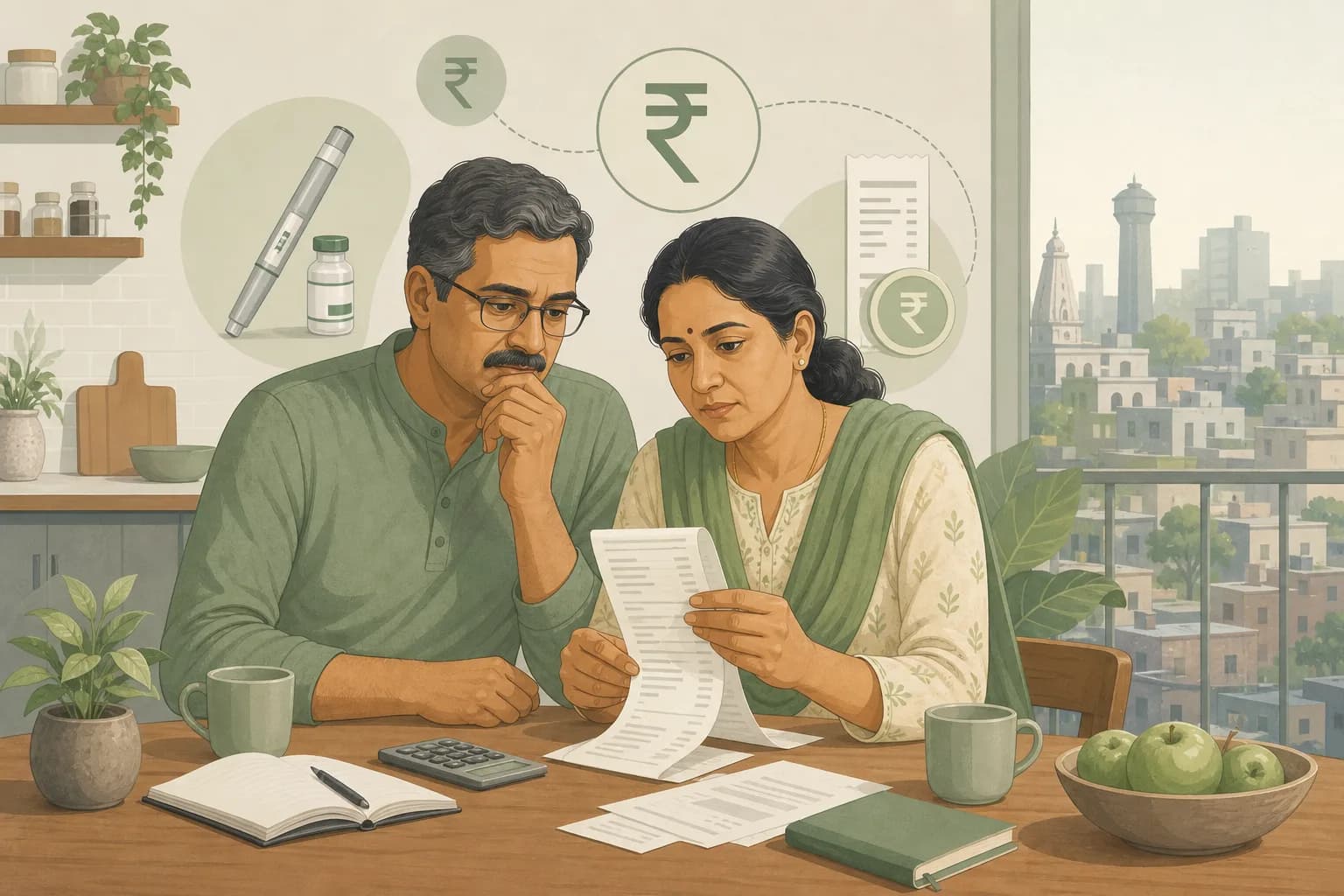
Most Indian health insurance excludes outpatient GLP-1 for obesity-only indications. Corporate plans occasionally cover diabetes-labelled use with prior authorisation and HbA1c documentation. CGHS and state schemes rarely fund monthly pens. Expect ₹6,000–₹25,000 monthly out-of-pocket unless employer benefits confirm formulary inclusion in writing before starting therapy. CDSCO-approved sourcing, Schedule H prescriptions, and ICMR-aligned follow-up apply across Indian practice.
Why do most Indian policies exclude outpatient GLP-1?
Retail health insurance in India historically covers hospitalisation—not chronic outpatient obesity pharmacotherapy costing ₹6,000–₹25,000 monthly. GLP-1 pens fall outside standard IPD bundles. Obesity labelled as cosmetic exclusion appears in many policy wordings even when ICMR recognises chronic disease framing. Read exclusions before assuming corporate card coverage extends to weight-management indications without diabetes documentation. Always consult a qualified endocrinologist, internal medicine specialist, or cardiologist for personalised decisions. Kesho provides drug-class education only—not prescribing advice. Verify CDSCO approval and Schedule H prescriptions at licensed Indian pharmacies before every refill.
When might employer wellness plans help?
Some metro corporate wellness programmes subsidise HbA1c labs or diabetes-labelled GLP-1 with prior authorisation—rare for weight-only pathways. HR benefits teams require written formulary confirmation; verbal assurances fail at pharmacy counters. Prior auth packets often need twelve-month weight trend, lifestyle attempt logs, and specialist referral letters. Start documentation before initiation, not after first denial. Always consult a qualified endocrinologist, internal medicine specialist, or cardiologist for personalised decisions. Kesho provides drug-class education only—not prescribing advice. Verify CDSCO approval and Schedule H prescriptions at licensed Indian pharmacies before every refill.
Does diabetes diagnosis change reimbursement odds?
Policies that cover diabetes outpatient medicines may treat GLP-1 differently when prescribed for glycaemic control versus obesity alone. Prescription indication wording matters—physicians document clinical rationale; patients should not relabel indications for insurance convenience. Misrepresentation risks claim rejection and ethical breaches. RSSDI-aligned diabetes care notes support legitimate diabetes-pathway claims where formulary allows. Always consult a qualified endocrinologist, internal medicine specialist, or cardiologist for personalised decisions. Kesho provides drug-class education only—not prescribing advice. Verify CDSCO approval and Schedule H prescriptions at licensed Indian pharmacies before every refill.
What about CGHS and government schemes?
CGHS and most state health schemes do not routinely fund monthly GLP-1 pens for outpatient obesity or diabetes at private retail prices. Central hospital formularies may stock limited molecules for in-patient contexts—not take-home pen programmes. Expect out-of-pocket budgeting unless you verify scheme-specific updates in writing with your dispensary. Always consult a qualified endocrinologist, internal medicine specialist, or cardiologist for personalised decisions. Kesho provides drug-class education only—not prescribing advice. Verify CDSCO approval and Schedule H prescriptions at licensed Indian pharmacies before every refill.
How to document for prior authorisation appeals?
Gather HbA1c, fasting glucose, comorbidity labs (hypertension, NAFLD markers), structured lifestyle programme attendance if available, BMI and waist records, and physician letter stating ICMR-aligned rationale. Appeals for obesity-only use rarely succeed; diabetes-labelled cases occasionally clear in corporate plans. Keep GST pharmacy invoices for tax deduction conversations separate from insurance—they are not interchangeable proofs. Always consult a qualified endocrinologist, internal medicine specialist, or cardiologist for personalised decisions. Kesho provides drug-class education only—not prescribing advice. Verify CDSCO approval and Schedule H prescriptions at licensed Indian pharmacies before every refill.
Are telemedicine prescriptions accepted by insurers?
Valid Schedule H prescriptions from NMC-registered teleconsultants may satisfy pharmacy and some employer prior auth if clinical notes are complete. Insurers reject prescription-free online sellers regardless of telehealth branding. CDSCO March 2026 enforcement targets unauthorized GLP-1 marketing—insurance fraud investigations overlap with grey-market sourcing risks. Always consult a qualified endocrinologist, internal medicine specialist, or cardiologist for personalised decisions. Kesho provides drug-class education only—not prescribing advice. Verify CDSCO approval and Schedule H prescriptions at licensed Indian pharmacies before every refill. RSSDI and ICMR guidance emphasise structured lifestyle support alongside pharmacotherapy for South Asian metabolic risk.
How to budget when insurance denies coverage?
Model twenty-four-month out-of-pocket totals including titration months, consultations, and labs. Generic semaglutide is often the lowest CDSCO-approved GLP-1 cost lever. Compare metro versus tier-2 pharmacy quotes with GST. Discuss affordability with your physician before starting—mid-year stops waste prior spend and may trigger weight regain. Always consult a qualified endocrinologist, internal medicine specialist, or cardiologist for personalised decisions. Kesho provides drug-class education only—not prescribing advice. Verify CDSCO approval and Schedule H prescriptions at licensed Indian pharmacies before every refill. RSSDI and ICMR guidance emphasise structured lifestyle support alongside pharmacotherapy for South Asian metabolic risk.
What questions should HR benefits teams answer?
Ask: Is GLP-1 on formulary for diabetes, obesity, or neither? Is prior auth required? Which molecules and doses? Annual cap? Can labs be reimbursed separately? Request email confirmation—chat transcripts disappear when HR rotates. Kesho does not negotiate insurance; this education helps you prepare employer conversations. Always consult a qualified endocrinologist, internal medicine specialist, or cardiologist for personalised decisions. Kesho provides drug-class education only—not prescribing advice. Verify CDSCO approval and Schedule H prescriptions at licensed Indian pharmacies before every refill. RSSDI and ICMR guidance emphasise structured lifestyle support alongside pharmacotherapy for South Asian metabolic risk.
Where is the complete insurance guide on Kesho?
Our insurance cornerstone explains corporate patterns, documentation templates, CGHS gaps, and appeal realism with India-specific examples. This landing summarises search intent for "GLP-1 insurance India." Link to cost and prescription guides when planning combined financial and clinical pathways. Markdown alternate available for research agents. Always consult a qualified endocrinologist, internal medicine specialist, or cardiologist for personalised decisions. Kesho provides drug-class education only—not prescribing advice. Verify CDSCO approval and Schedule H prescriptions at licensed Indian pharmacies before every refill. RSSDI and ICMR guidance emphasise structured lifestyle support alongside pharmacotherapy for South Asian metabolic risk.
Quick questions
Is GLP-1 Insurance Coverage India information on Kesho medical advice?
Where is the full guide?
What is the short answer on glp-1 insurance coverage india?
Related guides
 India Access
GLP-1 Cost in India (2026): What Patients Actually Pay
Cost is often the deciding factor for Indian families considering GLP-1 therapy. Prices vary by city, pharmacy, molecule, and whether you choose innovator or CDSCO-approved generic semaglutide. This guide breaks down realistic 2026 expenses—including hidden costs insurers ignore, titration-phase budgeting, and employer benefit limitations—so you can plan with your doctor, not chase misleading online deals that CDSCO has repeatedly warned against. Sustainable therapy requires honest maths: multiply monthly quotes by twenty-four before your first prescription, not just the first month's titration dose.
Read guide → India Access
Cheapest GLP-1 Options in India: A Drug-Class Cost Guide
"Cheapest GLP-1" searches spike every month in India—but the answer is not a single product name. Costs differ across the GLP-1 receptor agonist drug class by molecule, formulation, dose, city, and whether you choose CDSCO-approved generics. This guide compares class-level economics so you can discuss value with your doctor, not chase unsafe discounts.
Read guide → Doctor Guide
How to Talk to Your Doctor About GLP-1 Therapy in India
A fifteen-minute consultation goes further when you arrive prepared. Whether you are exploring GLP-1 therapy for diabetes, obesity, or both, these conversation frameworks help Indian patients partner with their doctors—not demand prescriptions. Good preparation respects your doctor's time, reduces repeat visits for missing investigations, and sets realistic expectations about titration, cost, and long-term commitment in a healthcare system where most GLP-1 spending is out of pocket. Drug-class literacy, organised labs, and honest budget discussion are the hallmarks of productive incretin consultations. Avoid unverified telehealth guarantees; seek NMC-registered physicians, CDSCO-approved pharmacies, and scheduled follow-up before your first injection day.
Read guide →
Medically reviewed
Dr. Ananya Mehta, MD, DM Endocrinology
Consultant Endocrinologist, India
This article has been reviewed by our medical advisory team, including endocrinologists, internal medicine specialists, and cardiologists, and is based on current scientific evidence and Indian clinical guidelines. Last reviewed: June 2026.
Last medically reviewed: Jun 15, 2026