Nutrition on GLP-1 Therapy
Reduced appetite makes every bite count. This hub gathers nutrition principles for Indian patients on GLP-1 medicines.
Short answer
GLP-1 therapy requires intentional nutrition: adequate protein, smaller portions, fibre-rich vegetables, and hydration. Indian vegetarian and non-vegetarian diets both work with proper planning alongside medication.
Key takeaways
- •GLP-1 suppresses appetite but does not guarantee nutrient adequacy—without adequate protein and resistance exercise, patients lose muscle alongside fat, increasing regain risk.
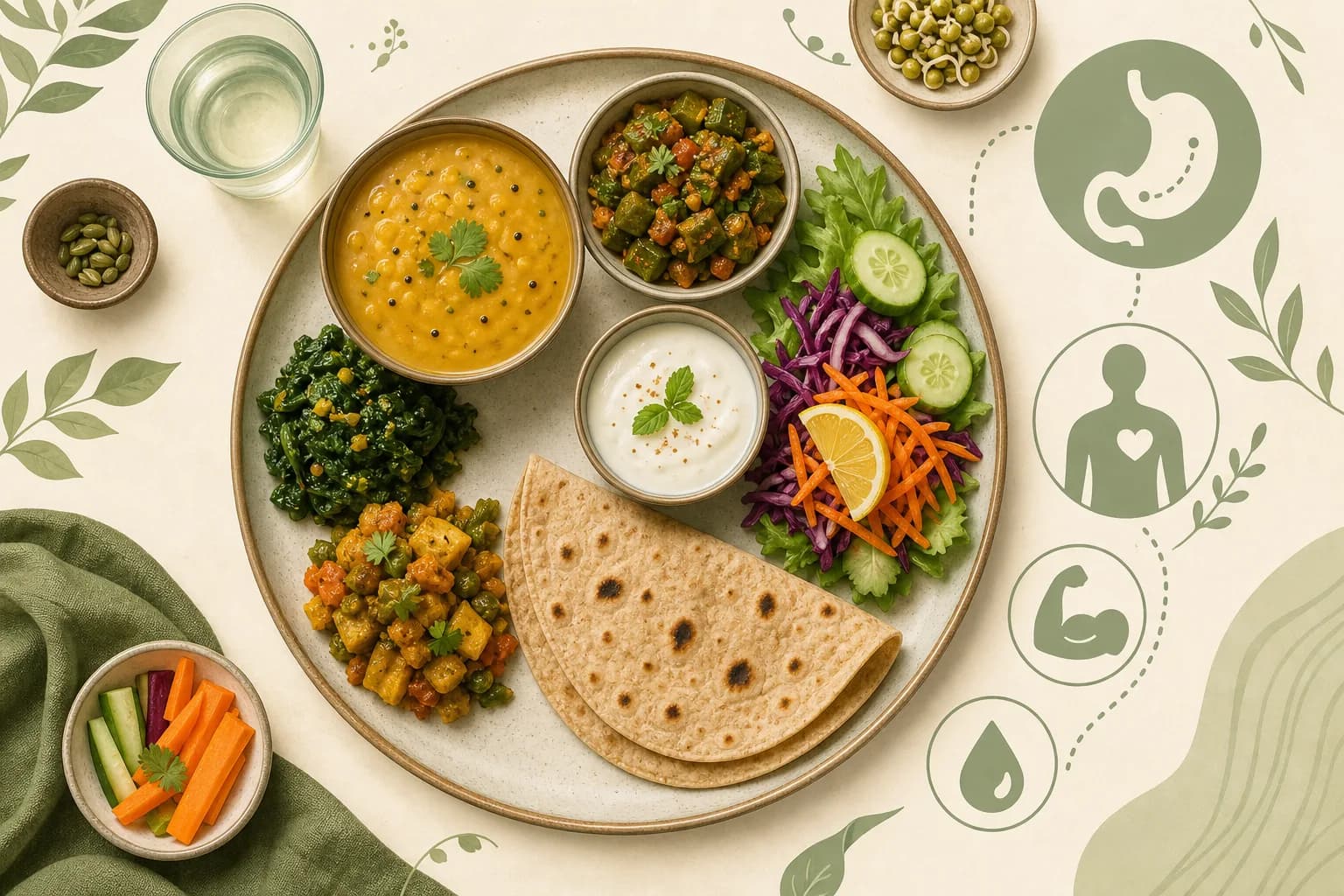
- •The Indian plate model works well: half vegetables, quarter protein (dal, paneer, fish, egg), quarter complex carbs (millet, brown rice), served in smaller katoris.
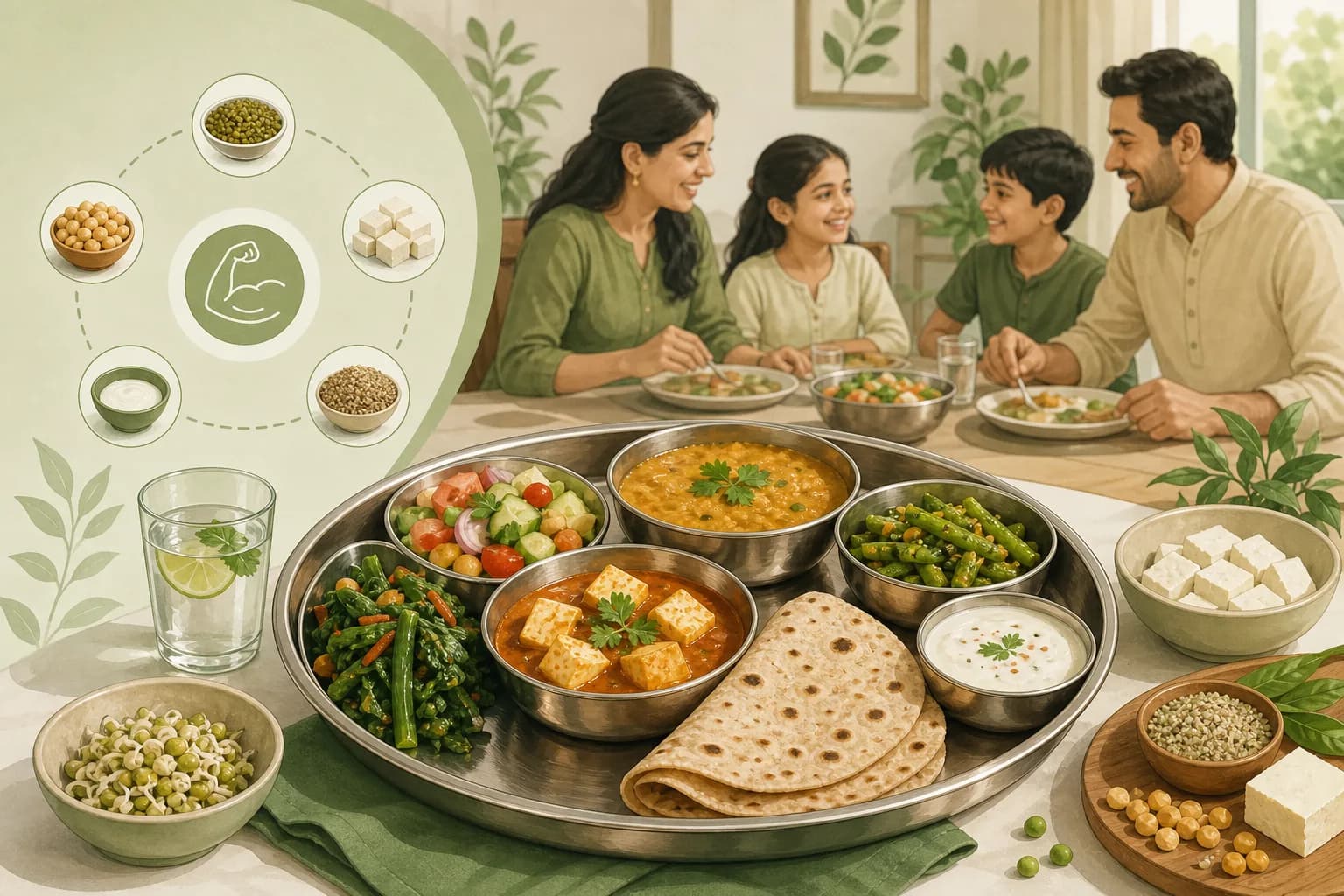
- •Vegetarian patients need distributed protein across meals—dal alone at dinner is insufficient; paneer, soya, curd, and sprouts fill gaps.
- •During nausea-prone titration weeks, prefer steamed, grilled, and lightly spiced foods over heavy fried festival dishes.
- •RSSDI emphasises medical nutrition therapy alongside GLP-1 pharmacotherapy—consult a clinical dietitian familiar with Indian cuisines for personalised plans.
At a glance (India)
| Protein target (general guidance) | 1.0–1.2 g per kg ideal body weight daily |
|---|---|
| Indian plate proportions | ½ vegetables, ¼ protein, ¼ complex carbs |
| Key vegetarian protein sources | Dal, paneer, soya, curd, sprouts |
| Micronutrients to monitor | Vitamin B12, vitamin D, iron |
| RSSDI recommendation | Medical nutrition therapy with pharmacotherapy |
Why does nutrition still matter when GLP-1 reduces appetite?
GLP-1 receptor agonists suppress appetite and slow gastric emptying, but they do not automatically deliver balanced nutrition. Without adequate protein and resistance exercise, patients lose muscle alongside fat—increasing metabolic slowdown and regain risk when therapy stops. RSSDI emphasises medical nutrition therapy alongside pharmacotherapy for type 2 diabetes and obesity. Every meal should prioritise nutrient density over empty calories because portion sizes naturally shrink. Indian festival seasons, office canteen habits, and late dinners still influence outcomes even when hunger feels muted. Medication makes healthy eating easier but cannot replace intentional food choices adapted to your cultural context.
What is the Indian plate model for GLP-1 patients?
A practical framework: half the plate vegetables (sabzi, salad, cooked greens), one quarter protein (dal, paneer, fish, egg, chicken), one quarter complex carbohydrates (millet, brown rice, whole wheat roti). Smaller katoris and plates help when hunger cues are blunted—you may feel satisfied with less food than before starting GLP-1. Eating slowly allows fullness signals to register before overeating. This model works for vegetarian thalis and non-vegetarian meals alike. Adjust spice levels during nausea-prone titration weeks without abandoning the basic proportions.
How should meal composition shift on GLP-1 therapy?
| Component | Before GLP-1 | On GLP-1 therapy | Why it matters |
|---|---|---|---|
| Portion size | Large thali portions | Smaller katoris, stop at comfort | Blunted hunger risks under-eating nutrients |
| Protein | Often concentrated at dinner | Distributed across all meals | Preserves muscle during weight loss |
| Vegetables | Variable | Half plate every meal | Fibre, micronutrients, satiety |
| Fried foods | Frequent at festivals | Limit during titration | Worsens nausea and gallbladder risk |
| Hydration | Often inadequate | Conscious fluid intake | Prevents dehydration from GI side effects |
How much protein do Indian patients need on GLP-1?
Target often 1.0–1.2 grams per kilogram of ideal body weight daily unless chronic kidney disease limits intake—confirm with your doctor. Distribute protein across breakfast, lunch, and dinner rather than concentrating at one meal. Non-vegetarian options include egg, fish, chicken, and lean mutton in moderation. Vegetarian sources include paneer, soya chunks, Greek-style curd, sprouts, and combined dal-rice for complete amino acids. Protein shakes supplement whole foods when daily targets are unmet. Muscle preservation during weight loss depends on both protein intake and resistance exercise two to three times weekly.
How can vegetarian and Jain patients meet nutrition needs?
Vegetarian Indians on GLP-1 must plan protein deliberately—dal alone at dinner provides insufficient daily intake during active weight loss. Combine paneer, soya, curd, sprouts, and varied dals across meals. Jain patients avoiding root vegetables can use nuts, seeds, paneer, and pulses within dietary rules. Monitor vitamin B12, vitamin D, and iron through periodic blood tests—deficiencies worsen fatigue during therapy. GLP-1 medicines are synthetic peptides suitable for all dietary patterns. Consult a dietitian experienced with Indian vegetarian cuisines for festival-season meal planning.
- Medical nutrition therapy
- Structured dietary counselling by qualified professionals to meet health goals—RSSDI recommends it alongside GLP-1 pharmacotherapy for diabetes and obesity management in India.
What Indian foods help during nausea-prone titration weeks?
Prefer steamed idli, plain khichdi, moong dal, grilled fish or tandoori chicken without heavy gravy, cold yoghurt, and lightly spiced soups. Ginger tea and small cold meals help some patients. Avoid heavy fried samosas, pakoras, and rich festival sweets during early weeks. Eat slowly in a calm environment. If nausea peaks in the morning, a small protein-containing breakfast before medicine may help—confirm timing with your doctor for oral formulations. Most gastrointestinal symptoms improve by 8–12 weeks with gradual dose titration.
Consult a clinical dietitian familiar with Indian cuisines for personalised meal plans. Combined lifestyle and pharmacotherapy achieves superior outcomes per clinical trial designs.
Why is hydration critical for GLP-1 patients in India?
Gastrointestinal side effects including vomiting and diarrhoea increase dehydration risk—dangerous during hot summers and for patients with kidney disease. Drink adequate water throughout the day unless fluid restriction applies. Oral semaglutide requires specific water intake before food per labelling. Patients combining GLP-1 with SGLT2 inhibitors face compounded dehydration risk during illness. Carry water during commutes and outdoor activities. Coconut water and buttermilk provide electrolytes but should not replace plain water as the primary fluid source.
Which micronutrients should Indian GLP-1 patients monitor?
Vitamin B12 deficiency is common among vegetarians and worsens fatigue during weight loss. Vitamin D insufficiency affects most urban Indians with limited sun exposure. Iron status matters especially for menstruating women with PCOS on GLP-1. Periodic blood tests guide supplementation—do not self-prescribe high-dose vitamins without results. Calcium intake from dairy or fortified alternatives supports bone health during weight loss. Rapid weight reduction without micronutrient attention can mimic medicine side effects through unrelated deficiencies.
How does exercise complement nutrition on GLP-1 therapy?
Resistance exercise two to three times weekly preserves lean muscle during caloric deficit—walking alone is insufficient for muscle maintenance. Bodyweight exercises, resistance bands, or gym training suit different budgets and settings. Post-meal walks improve glucose control in type 2 diabetes patients. Start gradually if previously sedentary. RSSDI supports combined physical activity and pharmacotherapy. Nutrition provides building blocks; exercise signals the body to retain muscle rather than metabolise it for energy during weight loss.
Kesho provides nutrition education only—not personalised diet prescriptions. Work with a qualified clinical dietitian and your treating physician for individual meal plans.
Frequently asked questions
Can I skip meals on GLP-1?
Is intermittent fasting OK?
How much protein daily?
Are protein shakes necessary?
Can I eat rice on GLP-1?
What about alcohol on GLP-1?
Do I need different nutrition for oral versus injectable GLP-1?
People also ask
Can I skip meals on GLP-1 because I am not hungry?
Avoid skipping protein-containing meals entirely. Reduced appetite makes every bite count—eat smaller nutrient-dense portions at regular intervals to preserve muscle and meet micronutrient needs. Skipping meals increases regain risk and may worsen nausea.
How much protein do Indian patients need on GLP-1?
Often 1.0–1.2 grams per kilogram of ideal body weight daily, distributed across meals, unless chronic kidney disease limits intake. Confirm targets with your doctor and a clinical dietitian. Whole foods first; protein supplements help if targets are unmet.
Is intermittent fasting safe with GLP-1 medicines?
Only with medical guidance, especially if on other diabetes medicines that raise hypoglycaemia risk. GLP-1 already reduces appetite—adding fasting may cause inadequate protein intake and muscle loss. Religious fasting during Ramadan or festivals requires advance planning with your doctor.
Can vegetarians and Jains meet nutrition needs on GLP-1?
Yes. Plan distributed protein from dal, paneer, soya, curd, and sprouts across meals. Monitor vitamin B12, vitamin D, and iron. GLP-1 medicines themselves are synthetic peptides, not animal-derived—the drug class suits all dietary patterns.
What foods help nausea during GLP-1 titration?
Steamed idli, plain khichdi, grilled fish or chicken, cold yoghurt, ginger tea, and small frequent portions work better than heavy fried or richly spiced festival foods. Eat slowly and stop at comfortable fullness.
Can I still eat rice and roti on GLP-1?
Yes in moderate portions paired with protein and vegetables. Prefer millet, brown rice, or whole wheat roti for sustained energy. Smaller katoris help when hunger cues are blunted—portion control matters more than eliminating staples.
Do I need protein shakes on GLP-1?
Whole foods first. Shakes help if daily protein targets are unmet despite meal planning, especially for vegetarian patients with high requirements during active weight loss. Choose low-sugar options and confirm kidney status with your doctor.
How does exercise fit with nutrition on GLP-1?
Resistance exercise two to three times weekly preserves muscle during weight loss. Pair activity with adequate protein intake. Walking after meals aids glucose control. RSSDI supports combined lifestyle and pharmacotherapy for best metabolic outcomes.
References
Related guides
 Nutrition
Nutrition on GLP-1 Therapy: An India-Focused Guide
GLP-1 medications reduce appetite—but what you eat still determines muscle preservation, nutrient adequacy, and long-term metabolic health. This guide adapts nutrition principles to everyday Indian kitchens, from dal-chawal to office tiffins, festival thalis, and late-night cravings. Whether you are newly starting dose titration or months into therapy, understanding how GLP-1 receptor agonists interact with Indian dietary patterns helps you partner with your doctor and dietitian rather than relying on medication alone. RSSDI positions medical nutrition therapy as essential alongside pharmacotherapy—not optional.
Read guide →NutritionGLP-1 and Indian Vegetarian Diet: A Practical Guide
Most Indian vegetarians rely on rice, roti, and dal—but GLP-1 therapy demands higher protein density per meal because appetite suppression makes under-eating effortless. Without planning, vegetarians lose muscle, develop fatigue, and regain weight faster if medication stops. This guide maps familiar staples—paneer, millets, moong, curd—to sustainable metabolic health during incretin therapy, festival seasons, and Jain or lacto-vegetarian dietary patterns.
Read guide →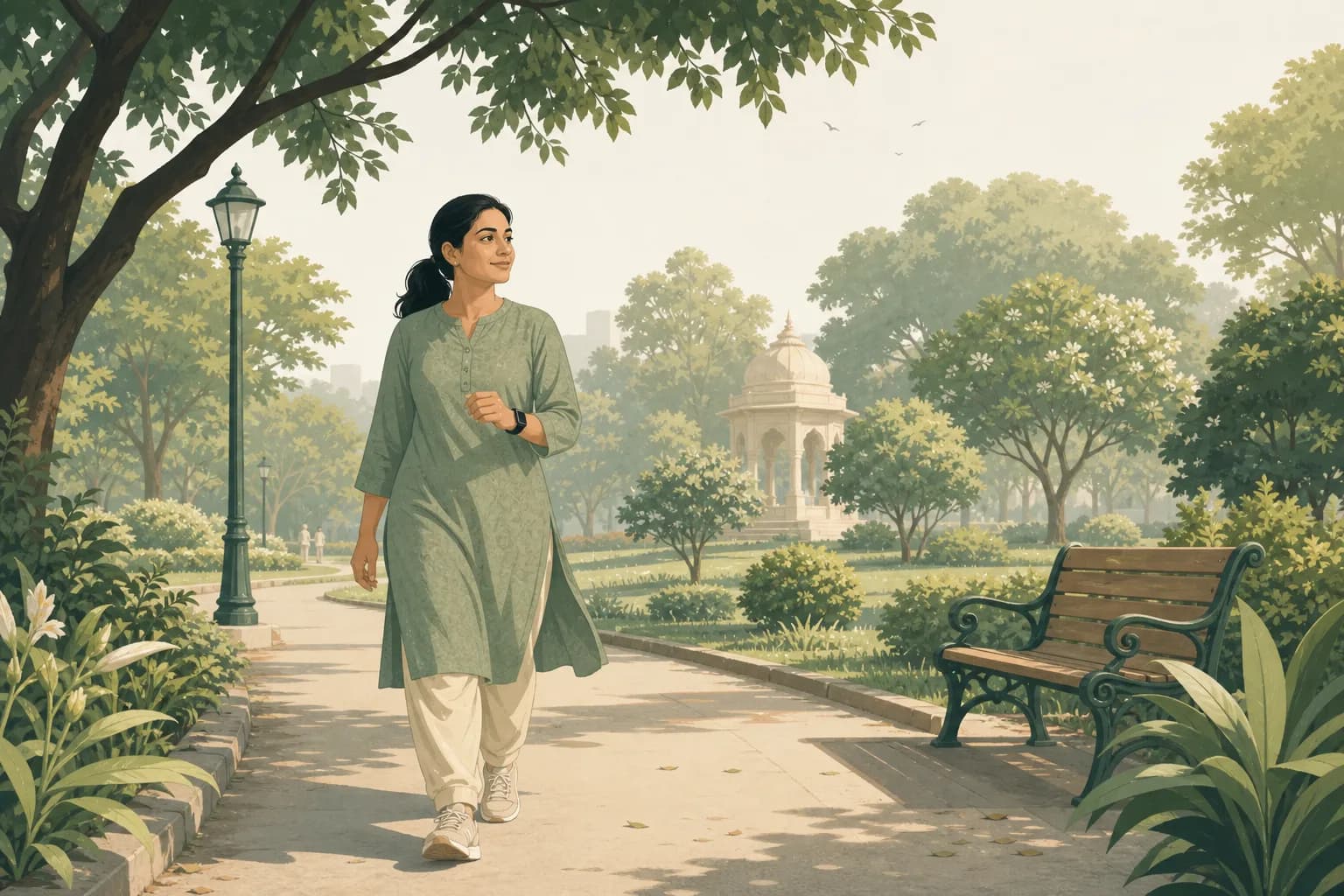 Lifestyle
Exercise on GLP-1 Therapy: Building Strength While Losing Weight
GLP-1 medicines shrink appetite—but exercise protects muscle, bone, and long-term metabolism. Indian patients on incretin therapy often focus on food changes alone, yet physical activity determines whether weight lost is mostly fat or includes precious lean mass. Here is how to stay active without overdoing it during titration, preserve strength in sarcopenic obesity patterns common in South Asia, and build habits that reduce weight regain if therapy pauses.
Read guide →LifestyleWeight Regain After GLP-1 Therapy: Why It Happens and What Helps
GLP-1 medicines are not lifetime guarantees. Many patients regain one-third to two-thirds of lost weight within a year of stopping—even those who succeeded during therapy. Understanding why regain happens physiologically and socially in Indian contexts helps you plan maintenance rather than panic when the scale creeps upward. This guide covers trial evidence, festival-season challenges, muscle preservation, and when continued therapy makes clinical sense despite cost.
Read guide →Related topics
Related guides
NutritionNutrition on GLP-1 Therapy: An India-Focused Guide
GLP-1 medications reduce appetite—but what you eat still determines muscle preservation, nutrient adequacy, and long-term metabolic health. This guide adapts nutrition principles to everyday Indian kitchens, from dal-chawal to office tiffins, festival thalis, and late-night cravings. Whether you are newly starting dose titration or months into therapy, understanding how GLP-1 receptor agonists interact with Indian dietary patterns helps you partner with your doctor and dietitian rather than relying on medication alone. RSSDI positions medical nutrition therapy as essential alongside pharmacotherapy—not optional.
Read guide →NutritionGLP-1 and Indian Vegetarian Diet: A Practical Guide
Most Indian vegetarians rely on rice, roti, and dal—but GLP-1 therapy demands higher protein density per meal because appetite suppression makes under-eating effortless. Without planning, vegetarians lose muscle, develop fatigue, and regain weight faster if medication stops. This guide maps familiar staples—paneer, millets, moong, curd—to sustainable metabolic health during incretin therapy, festival seasons, and Jain or lacto-vegetarian dietary patterns.
Read guide →LifestyleExercise on GLP-1 Therapy: Building Strength While Losing Weight
GLP-1 medicines shrink appetite—but exercise protects muscle, bone, and long-term metabolism. Indian patients on incretin therapy often focus on food changes alone, yet physical activity determines whether weight lost is mostly fat or includes precious lean mass. Here is how to stay active without overdoing it during titration, preserve strength in sarcopenic obesity patterns common in South Asia, and build habits that reduce weight regain if therapy pauses.
Read guide →LifestyleGLP-1 Therapy During Indian Festivals — Diwali, Eid, and Wedding Season
Indian festival season — Diwali, Eid, Navratri, Pongal, weddings — overlaps with GLP-1 titration for many patients. Social pressure to eat heavily conflicts with slowed gastric emptying from incretin therapy. This guide helps you navigate portions, travel, storage, and family conversations without abandoning medical plans or hiding therapy from your prescribing doctor.
Read guide →
Medically reviewed
Dr. Ananya Mehta, MD, DM Endocrinology
Consultant Endocrinologist, India
This article has been reviewed by our medical advisory team, including endocrinologists, internal medicine specialists, and cardiologists, and is based on current scientific evidence and Indian clinical guidelines. Last reviewed: June 2026.
Last medically reviewed: 2026-06-26
Discuss with your doctor
Use our assessment to prepare discussion topics for your endocrinology visit.